Detailed Explanation of the Causes of Rotten Fruit in Green Peppers and the Control Methods
In the process of growing green peppers in greenhouses, rotten fruit often affects the yield, causing the yield to be halved and bringing huge economic losses to growers. So how should rotten fruit be controlled? What causes rotten fruit in green peppers? Let us learn about it together.
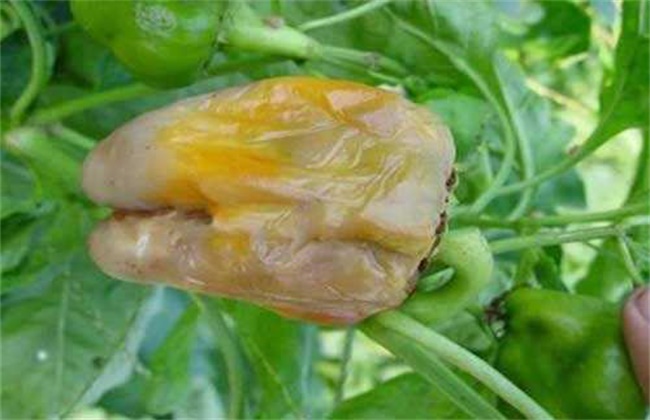
1. Rotten fruit caused by Phytophthora blight
Phytophthora blight is a devastating disease of greenhouse green peppers. Once it occurs, it can spread to the entire greenhouse in a short time. Generally, it can cause plant death in 3-5 days, with yield reduction mostly of 20%-30%, and in severe cases, total crop failure. This disease can occur throughout the entire growth period, and is most likely to occur after fruit set.
Control method: Seeds and soil can be disinfected and sterilized to reduce pathogen invasion, or in the early stage of the disease, 25% metalaxyl wettable powder at 200 times dilution can be used for root drenching. When a central diseased plant appears in the field, 0.3% copper sulfate can be used for root drenching to seal off the disease center. At planting, after seedling recovery, and before flowering, spray with Ruimengtong, Ruidumengxin, and metalaxyl respectively for control. Note to alternate the agents to prevent resistance.
2. Rotten fruit caused by gray mold
Gray mold is caused by infection with the fungus Botrytis cinerea. It is more severe under low temperature and high humidity, poor ventilation, excessive planting density, and poor disease resistance of plants. The pathogen overwinters in diseased residues and soil, and spreads through airflow, irrigation water, and farming operations, invading through wounds and aging or dead tissues. It can occur at the seedling stage and adult plant stage. The obvious characteristic after onset is the production of irregular concentric-ring gray mold on the lesions.
Control method: Do a good job in ventilation and watering. Watering should be done in the morning on sunny days, appropriately control watering, and remember not to flood irrigate. In the early stage of the disease, spray with Procymidone or thiophanate-methyl for control.
3. Rotten fruit caused by sclerotinia rot
Sclerotinia rot can infect plants from the seedling stage to the adult plant stage, mainly harming the base of the stem, and can also harm the stem, leaves and petioles, flowers, fruits, and fruit stalks. The fungus reproduces extremely quickly in a warm and humid environment. At a temperature of 20-25 degrees and humidity above 90%, it is most suitable for infection, with an incubation period of 5-8 days.
Control method: Implement a 3-5 year crop rotation with gramineous crops, and pay attention to ventilation and air exchange in the greenhouse to avoid high humidity. When the disease occurs, spray with carbendazim and Procymidone or Vinclozolin for control.
4. Rotten fruit caused by anthracnose
Anthracnose mainly affects leaves and fruits. When the fruit is affected, it shows water-soaked yellow-brown round spots, often densely covered with small black dots. When the leaves are infected, they first show water-soaked chlorotic spots, which later become small spots with brown edges and a light gray center.
Control method: After entering the fruiting stage, spray with chlorothalonil or thiophanate-methyl for control.
The above is an introduction to the causes of rotten fruit in green peppers and the control methods. I hope it can help you. To learn more related knowledge, please follow us.