What are the growing environment requirements for planting rapeseed?
Rapeseed, also known as oilseed rape, is an oil crop of the Brassicaceae family and is currently one of the main oil crops. In the south, rapeseed is sown in autumn and grown through the winter, and it must undergo low-temperature vernalization to flower and set seed, so the north is more suitable for planting it than the south. Here are the specific basic environmental requirements, explained one by one right away.
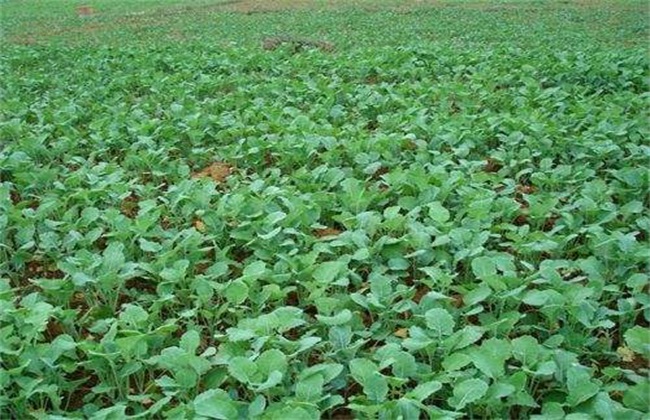
1. Light
Rapeseed is a short-day plant and is not strict about light; generally, the light available during winter planting is enough to meet its growth requirements. However, adjusting the light at different stages may be more beneficial for growth, but since it is usually planted in the open field, the sowing date is perhaps the only thing that can be adjusted.
2. Temperature
Rapeseed is very sensitive to temperature. Generally, sowing can germinate once the temperature is about above 15, then the seedling stage can grow at almost any temperature, and the plant needs temperatures above 10 degrees to complete its growth. After winter sets in, the low winter temperatures help complete vernalization, and sub-zero temperatures are required. In a warm winter, flower bud differentiation may be poor, resulting in fewer pods and empty shells.
3. Fertilizer and water
Rapeseed likes fertilizer and is tolerant of it, so more fertilizer can be applied; its root system also has a strong ability to absorb fertilizer, so more fertilizer can be applied. Before winter, the main focus is on applying nitrogen fertilizer, phosphate fertilizer, and trace elements, calcium and boron fertilizer, to ensure good leaf growth. After spring begins, the main focus is on applying potassium fertilizer to strengthen the stems and prevent lodging, boron fertilizer to promote flowering, and less nitrogen fertilizer. Before winter, plow the soil 40 cm deep and bury the base fertilizer deeply, so less fertilizer is needed in winter. After covering the base fertilizer with soil, water it to aid absorption. Before winter, irrigate multiple times after the seedlings recover, maintaining 50% moisture content; do not irrigate in winter, and do not irrigate during flowering.
4. Soil
Rapeseed has a main root and a taproot system, with a relatively developed root system that penetrates downward and spreads widely with many branches, so it needs deeper, loose, breathable soil that is not compacted; compaction leads to poor respiration and root oxygen deprivation, which is unfavorable for growth. It requires fields that retain fertilizer and water and do not accumulate water for planting.
Rapeseed has relatively strict requirements for soil and temperature during growth because of the influence of its unique growth characteristics. It is not strict about light, fertilizer and water because of its strong adaptability; even if these are not satisfied, the impact is small. But in production, a better growing environment must be provided for a high yield.