Detailed Explanation of Key Management Techniques for Cucumbers in the Mid-to-Late Stage
Cucumber is a typical cucurbit vegetable, well received by many people in our country, very rich in nutrients, and with broad market demand. When planting cucumbers, management work is very important, especially after cucumbers enter the flowering and fruiting stage in the mid-to-late period. So how should cucumbers be managed in the mid-to-late stage? Below, the editor brings you the mid-to-late stage management techniques for cucumbers. Let's take a look!
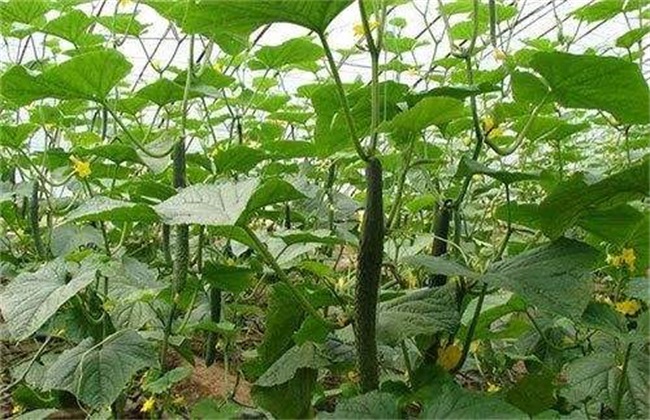
1. Pruning Management
If the variety planted is one that bears fruit on the main vine, then when pruning, we should remove the side branches and tendrils from the plant. Then wrap the plant around the hanging string to encourage the cucumber to rise in a snake-like manner, and then combine this with flower and fruit thinning work. Remove overly dense female flowers and deformed fruits. For spring-planted cucumbers, during the growth period, the leaves can number more than 60. At this time, attention should be paid to lowering the vines, and the growing tip of the plant should be re-tied to the string, about twice. If it is autumn-planted cucumbers, carry out pinching to promote the growth of returning fruits.
2. Temperature Management
When planting cucumbers, we should control the planting temperature according to the growth habits of cucumbers, keeping the temperature range within 15-35 degrees. Moreover, we should pay attention to controlling the day-night temperature difference and reasonably adjust the temperature according to the growth stage of the cucumbers. During the fruiting period of cucumbers, the temperature should be controlled at around 28 degrees, with the day-night temperature difference maintained at around 10 degrees. When the nutrient solution temperature is concerned, the day and night temperatures should both be appropriately lowered by about 3 degrees. If the temperature is too high, then attention should be paid to doing a good job of ventilation and cooling to avoid burning.
3. Removing Old Leaves
Cucumber leaves are divided into young, functional, and old leaves. The photosynthesis of young leaves is relatively poor, and the chloroplasts have not yet fully developed, so they need functional leaves to provide nutrients. Functional leaves have relatively more chloroplasts and are also the main photosynthetic leaves, supplying the nutritional needs of the organs of the whole plant. After about two months, the functional leaves gradually age and become old leaves. The photosynthetic capacity of old leaves is also relatively poor, and the photosynthetic substances they produce can only maintain their own consumption, and gradually become insufficient. Therefore, we should promptly remove old leaves to prevent the functional leaves from bearing too heavy a burden. This can also improve the permeability of the plant and reduce the occurrence of pests and diseases.
4. Fruit Protection Measures
If large-bellied cucumbers appear in the mid-to-late stage, it is mainly caused by poor fertilization. When the temperature rises, if nutrition is insufficient, the plant becomes weak, and waist-like cucumbers are likely to appear, mainly caused by a lack of nutrients. There are also bitter cucumbers, abortive cucumbers, and various other undesirable cucumbers, so we must carry out different fruit protection measures according to different situations. For example, when abortive cucumbers appear, attention should be paid to spraying glucose and widening the day-night temperature difference. Cucumbers should not be too densely set; if too many fruits are set, the fruits will compete with each other for nutrients, leading to abortive cucumbers.
The above is a brief introduction to the mid-to-late stage management techniques for cucumbers. The mid-to-late stage management of cucumbers is very important. Timely harvesting is necessary to provide sufficient nutrients and growth space for new cucumbers and ensure yield. That is all for today's introduction. This article is for reference only, and we hope it can help everyone!