How to prevent and control pests and diseases of choy sum? Introduction to practical prevention and control measures
During the growth of choy sum, it is highly susceptible to the harm of certain pests and diseases, which have a huge impact on the yield and quality of choy sum and bring huge economic losses to farmers. So what are the common pests and diseases of choy sum? How should they be prevented and controlled? Let's learn about them together with the editor.
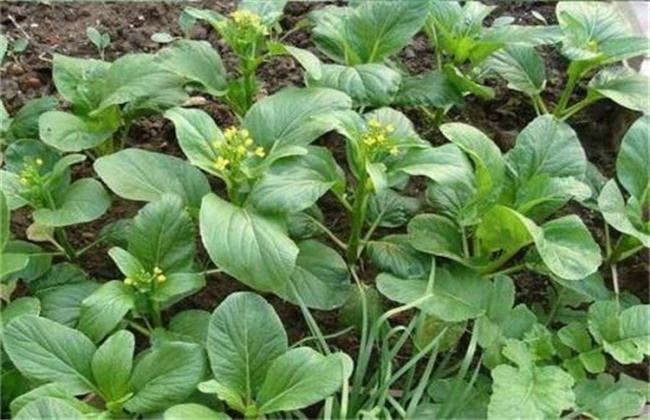
1. Viral disease
Choy sum viral disease mainly occurs at the seedling stage. Because varieties and pathogens differ, two types of symptoms appear after infection: one is the deformed mosaic type, and the other is the necrotic spot type. After the plant is infected, it produces fewer pods, and the seed setting rate and germination rate are low.
Prevention and control measures: For the prevention and control of viral disease, comprehensive measures should be taken, with prevention as the main approach. Choose varieties with strong disease resistance; generally, early-maturing varieties have stronger disease resistance than late-maturing varieties. Before sowing, clean up leftover plant residues and weeds, avoid continuous cropping, promptly pull out diseased plants and burn or bury them deeply, regularly spray fungicides to sterilize, increase the application of phosphorus and potassium fertilizers, and cultivate robust plants. At the same time, aphids must be controlled to cut off the transmission route.
2. Downy mildew
Downy mildew mainly harms the leaves of choy sum. The symptoms are irregular spots on the leaves, grayish green, and in the later stage a downy mildew layer appears on the diseased spots.
Prevention and control measures: Also learn to choose varieties with strong disease resistance, do a good job of field cleaning, and eliminate pathogens. Diseased leaves should be removed promptly to prevent the spread of pathogens. At the early stage of the disease, spray 75% chlorothalonil wettable powder 600-800 times dilution, once every 10 days, for 2-3 consecutive times.
3. Black spot
Black spot mainly harms leaves, petioles, and flower stalks. When leaves are infected, nearly round chlorotic spots first appear, and after expansion the edges become light green to dark brown. In severe cases, multiple lesions merge into large patches, causing the entire leaf to wither and die, and finally the leaves of the whole plant dry up from the outside inward.
Prevention and control measures: Seeds can be treated by soaking in warm water or by chemical seed dressing. When the disease occurs, spray chlorothalonil, mancozeb, anilazine, and other chemicals. Generally, control once every 15-20 days. Among these, anilazine should be applied 1-3 times according to the condition of the disease.
4. Cabbage caterpillar
The main pest is the cabbage caterpillar. In severe cases, it often eats all the leaves, leaving only the veins. Cabbage caterpillars are generally prone to appear when harvesting from the middle seedling stage to the large seedling stage. If not controlled in time, they can have a huge impact on yield.
Prevention and control measures: Spray BT powder 1200-2000 times dilution once at the seedling stage, 20-25 grams per mu. After fertilizing and watering, be sure to apply pesticide, but note that pesticide application is prohibited half a month before harvest to avoid pesticide residues.
The above is an introduction to pest and disease prevention and control measures for choy sum. We hope it can help you. If you want to learn more related knowledge, please stay tuned to us.