Key Points and Methods of Fertilization Technology for Choy Sum
Choy sum, also known as flowering Chinese cabbage, is one of the specialty vegetables of southern China. Its quality is tender, its taste sweet and bitter, and it is rich in nutrients, with extremely high edible value and cultivation value. When growing choy sum, fertilization and watering are relatively important, as they affect its yield. So how should choy sum be fertilized? Come and take a look with the editor.
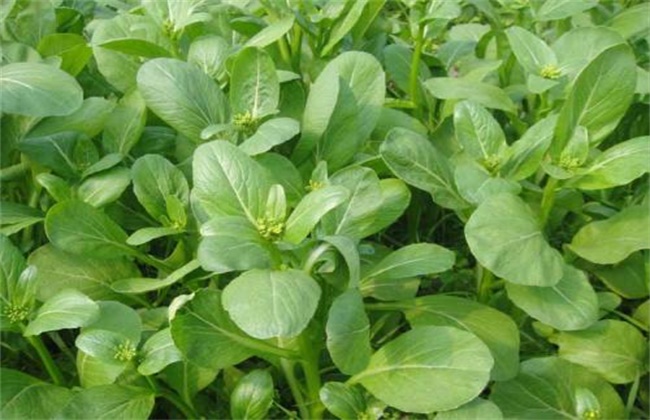
1. Fertilizer Requirements
Choy sum prefers a warm and humid climate. Its root system is relatively shallow with many fibrous roots, and it is easy to survive transplanting. It should be planted on sandy loam or loam soil with high organic matter content and convenient drainage and irrigation. In terms of mineral nutrient uptake, it absorbs the most nitrogen, followed by potassium, and the least phosphorus. The ratio of nitrogen, phosphorus, and potassium is 3.5:1:3.4. According to experiments, for every 1000 kg of choy sum produced, it needs to absorb 2.2-3.6 parts of nitrogen, 0.6-1 kg of phosphorus, and 1.1-3.8 kg of potassium from the soil. The period of highest nitrogen fertilizer uptake by the plant is from the budding stage to the harvest stage, accounting for about 40%-60%; the peak period of phosphorus uptake is also from the budding stage to the harvest stage, and the same is true for potassium uptake.
2. Base Fertilizer
Choy sum is a fast-growing vegetable with a shallow root system and a short growth period, and it is planted at high density, so applying sufficient base fertilizer is necessary. The soil should be prepared and beds raised in a timely manner, and the soil should be deep-plowed and sun-bleached to kill pathogens and insect eggs and reduce the harm of pests and diseases. Then sufficient base fertilizer should be applied. Generally, the bed width is 1.2-1.5 m, the height is 20-30 cm, and the shape is like a turtle's back. For the base fertilizer, organic fertilizer or farmyard manure can be selected, applying 80-100 kg per mu, or 1000 kg of decomposed organic fertilizer, to continuously provide nutrients for the growth and development of choy sum.
3. Topdressing
In addition to applying sufficient base fertilizer, topdressing should also be done multiple times to meet the needs of choy sum growth and development and improve yield and quality. During the seedling stage, nitrogen fertilizer is mainly used, applying a thin nitrogen fertilizer solution every 3-5 days to promote rapid growth of choy sum. During the leaf growth stage, compound fertilizer mainly based on nitrogen fertilizer is also applied as topdressing, but compared with the seedling stage, the concentration of fertilizer and water should be appropriately increased. In the late growth stage, high-potassium compound fertilizer should be applied as topdressing, with the same concentration as during the leaf growth stage.
The above is an introduction to the fertilization technology for choy sum. I hope it can help you. If you want to learn more related knowledge, please stay tuned to us.