How to grow jicama seedlings? Detailed explanation of methods and key technical points
The scientific name of jicama is Pachyrhizus erosus, and its main edible part is the swollen underground root. The seeds are pod-shaped and can be used as an insecticide. It is currently cultivated in various parts of southern China and can be considered a juicy, heat-relieving fruit. Planting mainly relies on seed propagation. The seeds are relatively hard and difficult to germinate, so they are easy to establish after seed soaking and sprouting treatment before sowing. Direct sowing takes a long time to emerge. Today we will discuss the jicama seedling growing method.
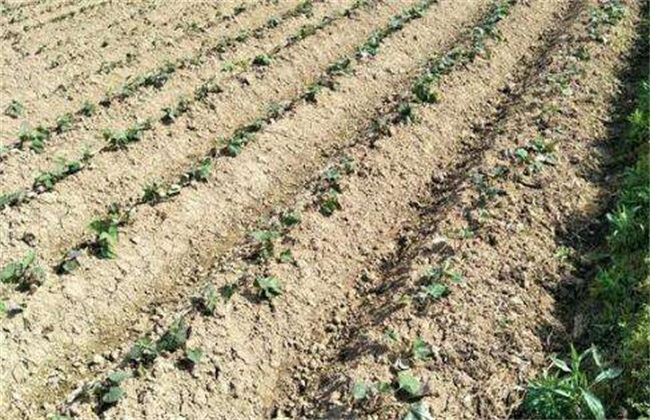
1. Seed saving
When planting in the previous season, seeds for the next season should be saved. Seed saving means directly selecting large, plump seed pods that have not been bitten by insects when the pods mature and turn yellow. After picking them, peel them open and take out the mature, discolored, plump large seeds. If the pods are completely dry, the seeds can be sealed directly; if not, you can first dry them in the sun until they split open, then take out the seeds and store them.
2. Land selection and preparation
A sandy loam soil that is well aerated, retains water and fertilizer, and is not sticky in the deeper layers is needed for planting. The sowing land should be deeply plowed, turning the soil to a depth of 30 to 40 cm, which is beneficial for root growth. After plowing, apply base fertilizer. Generally, about 1000 jin of livestock manure, 100 jin of plant ash, and 50 jin of superphosphate are needed per mu. The fertilizer application is relatively heavy because the roots like fertilizer and require a lot of nutrients for growth. After fertilizing, mix with fine soil, then bury it underground, cover it with 8 cm of fertilizer-free soil, and then level the land.
3. Seed treatment
The seeds are relatively large, hard, thick-skinned, and tough-skinned, so direct sowing makes germination difficult. Therefore, after seed soaking and sprouting treatment, then sowing, seedlings emerge quickly and uniformly. First, place the seeds in hot water at 55 degrees and stir to soak for 20 minutes, then take them out and soak them in warm water at 25 to 30 degrees for about 10 hours. After the seeds have absorbed enough water, take them out, dry them, wrap them in a clean wet towel, and place them in an electronically controlled temperature box to sprout. Every day they must be taken out and rinsed to remove the mucus produced, to avoid seed rot. After about a few days, first take out the sprouted seeds and sow them first, and sow the later ones afterward.
4. Sowing
For sowing, directly dig holes by hand on the seedbed and sow. Generally, the plant spacing for sowing is 3 cm and the row spacing is about 5 cm. Sow directly and cover with 1 cm of soil. If there are many already sprouted, the soil covering can be reduced further. You can also directly insert the seeds so that the upper end of the white sprout is exposed above the soil surface and the rest is inserted into the soil. After sowing, water to moisten the soil so it binds closely. If high temperature and strong light are encountered, cover with shade, and water in the evening.
5. Management
After emergence, if some are slower, you can check once when 50% have emerged. If seed rot occurs, replant seedlings, and carry out replanting on cloudy days. Apply some dilute fertilizer water in time to promote uniform seedling emergence. After the seedlings are uniform, thin and divide the seedlings once, keeping strong seedlings, then do not apply fertilizer water, and harden the seedlings. One week before transplanting, apply sufficient fertilizer water, and water thoroughly before transplanting.
Jicama is mainly grown by raising seedlings from seeds, but because the seeds are hard, special attention must be paid during seedling raising. Sowing after artificial seed soaking and sprouting is a commonly used method in production, but it may take time, and the soaking temperature must be adjusted. The above content is provided for reference.