What are the growing environment requirements for purslane?
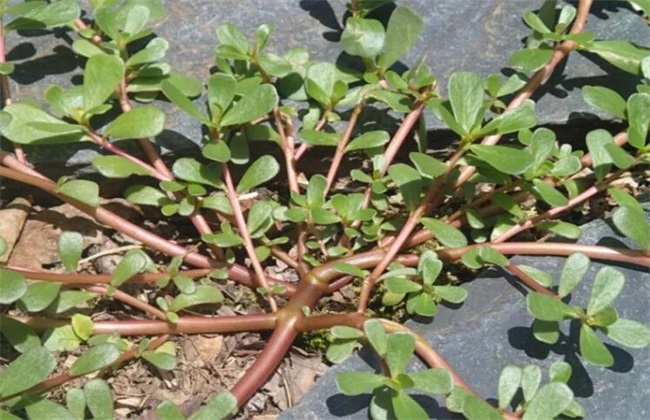
Purslane is generally a perennial wild vegetable that grows in rural fields, field edges, sloping land, roadsides, ditches and other places, and people have been digging it up to eat since very early times. Wild vegetables all have strong growing ability, and generally can survive even when the environment is not suitable for them. But if it is cultivated artificially in pursuit of yield and quality, then you must create and provide the most suitable growing environment for purslane as much as possible. So next let us look together at what conditions purslane needs to grow well.
1. Light
Purslane needs short-day conditions and an environment with not-too-strong sunlight for growth; it does not need strong light. Under strong light, it may drop leaves, so it should be planted in a relatively shady place, and then receive light for a long time. Under long-day conditions, the leaves will become thinner, larger, abnormally colored, lusterless, dull and unattractive, affecting the taste. But do not let it be too shady; too much shade makes it prone to pests and diseases, with weak resistance.
2. Temperature
Purslane likes warmth and cannot tolerate cold. During the growing period, the most suitable temperature is 25 to 35 degrees. Below 10 degrees, growth stops, so in subtropical regions it may need protected cultivation in winter. In summer, when high temperatures exceed 35 degrees, flowering is affected and growth is slow.
3. Humidity
Purslane mainly grows near water, so purslane likes moisture and needs enough water to grow well. But in order to adapt to the environment, purslane has a strong root system, with very strong water-absorbing ability, and the roots also have strong regenerative ability. Therefore, during growth, irrigation should be frequent and water should be sufficient, ensuring the soil has a 65% moisture content. But during the peak growth period from May to June, do not keep it too wet; keep the top two cm of soil dry to avoid disease. When just planted, be careful not to water, and harden the seedlings, to ensure the root system remains strong under artificial cultivation.
4. Nutrition
For growth, it mainly needs the most nitrogen fertilizer, mainly to grow leaves, making the leaves dark green, tender and fleshy, improving quality and ensuring growth needs. Nitrogen fertilizer should be applied as topdressing multiple times, but farmyard manure can be used as base fertilizer, as it has more nutrients, including some trace element components as supplements. In the later stage, apply topdressing multiple times, apply less potassium fertilizer, and use it only in the early stage when the roots and stems are strong. In the later stage, it can be applied less. In the later stage, more compound fertilizer can be applied, with multiple harvests.
5. Soil
Purslane likes fertile soil for growth. It has a strong root system, likes water and is drought-tolerant but afraid of waterlogging, so you should choose sandy loam soil with good fertilizer retention and drainage and aeration, and plant it in soil where aquatic plants have not been grown. The terrain can be somewhat higher than rice paddies, and it is best to plant it at the foot of a mountain, not far above a water source.
The above are the best environmental requirements for purslane growth. They are determined according to purslane's growth characteristics and its own features. You can refer to them yourself and combine them with the actual local environment to provide and improve this environment, so as to improve and ensure yield and quality.