What are the growing environment requirements for lilies?
Lily bulbs contain a large amount of starch, can be eaten, and have high edible value. They are mainly an important medicinal material that can moisten the lungs and clear the heart, and are mainly used to treat symptoms such as mental absent-mindedness and insomnia with frequent dreams. It is said that they also have anti-cancer effects. In recent years, large-scale planting has begun, but friends who lack some experience should pay attention to the planting conditions in Baihe, and can read the content of the article.
1. Temperature
Lilies prefer a cool environment and are relatively cold-tolerant. At 12°C, young buds can germinate, and at 14°C they will quickly sprout and emerge from the soil. 13 to 18°C is the temperature at which stems and leaves grow fastest. During the flowering period, temperatures above 20°C and below 30°C are best. After that, the bulb enlargement period requires a temperature of 12 to 14°C.
2. Humidity
Lily bulbs prefer a dry and breathable soil environment. The air environment should not be too humid either. Air humidity can be maintained at around 45%, and underground humidity at around 40%. Too much moisture will cause disease, bulb rot, or inhibit respiration and growth. Generally, it should be kept dry so that air permeability is good, the soil is not sticky and heavy, and the bulbs are easy to enlarge. Above-ground humidity just needs to be sufficient, since the plant still needs water to maintain itself.
3. Nutrients
Lilies need more fertilizer. Generally, potassium fertilizer is needed the most, followed by nitrogen fertilizer. When the above-ground plant is fully green, photosynthesis requires nitrogen fertilizer to promote leaf growth. However, do not apply nitrogen fertilizer in the later stage. For a period before harvest, the above-ground part may already have withered. In the early stage, apply nitrogen fertilizer at about 200 jin of compound fertilizer per mu, with nitrogen fertilizer accounting for the largest proportion. Then, during the bulb enlargement period, apply a topdressing once, generally 300 jin of potassium fertilizer per mu or about 400 jin of plant ash per mu. Sometimes attention should be paid to adding some phosphorus fertilizer to ensure no nutrient deficiency.
4. Light
With 10 hours of light per day, most planting areas can meet the requirement, but strong light is not good for lilies and can easily sunburn the leaves and affect nutrition. Moreover, if the exposed soil is too dry or drought-stricken, the bulbs will stop enlarging and growing, and the plant will lose water, affecting quality. It may even dry the lilies to death, since the underground bulbs are mainly composed of water.
5. Soil
Lilies are especially afraid of water accumulation and flooding, and are particularly prone to root rot, with localized or total rotting. Therefore, the planting site must be deep, dry, well-drained gentle sloping land. Do not plant in sticky, compacted, low-lying land or paddy fields. It is best to plant on land at the foot of hills that is higher than the irrigation level of rice fields.
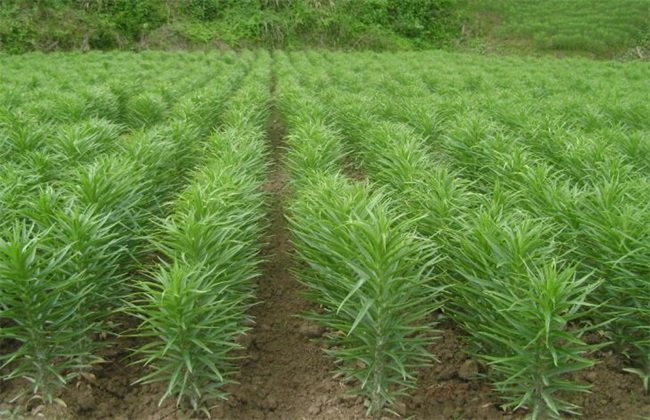
The above-ground part of the lily is short and dark green, and the underground bulb is afraid of water and waterlogging. Therefore, the entire growing environment should be set around the growth characteristics and needs of lilies. Then, lilies grown under these conditions have better quality, and growers can also reduce some unnecessary losses.