Reasons for Low Oat Seed Germination Rates and How to Improve Them
Oats are a food we are all familiar with, with relatively high nutritional value, and quite a few people grow oats. However, many farmers lack professional agricultural skills, so when they grow oats, the seed germination rate is often low. So how do we improve the seed germination rate when planting? Let's find out together.
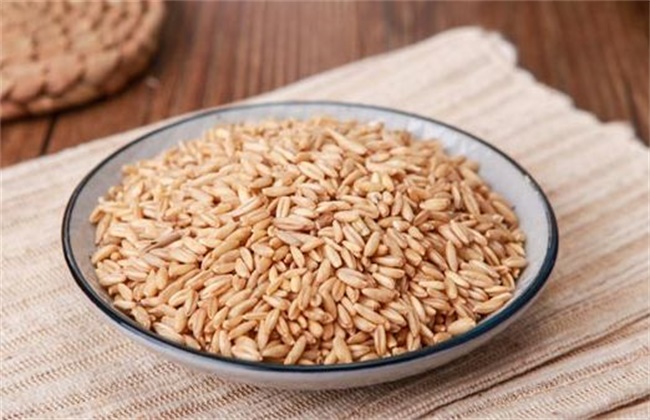
I. Growing Environment
1. Temperature
Oats prefer a cool environment but are not cold-tolerant, and are best suited for cultivation in the north. Their seeds can germinate at around 2-4°C, and the seedlings can withstand low temperatures of minus 2°C, making oats the most cold-tolerant of the cereal crops. In northern and northwestern China, winter temperatures are cold, so only spring sowing is possible, while in southern regions, where temperatures are generally higher, autumn sowing is possible, with the crop maturing before the high summer heat arrives.
2. Soil
Under good cultivation conditions, oats can achieve good yields in soils of various textures, but moist soil rich in humus is the best. Oats are more adaptable to acidic soil than other cereal crops, but are not suitable for cultivation in saline-alkali land.
3. Water
Oats grow in high-cold desert regions, but seed germination requires sufficient moisture; without enough water, the seeds cannot sprout. According to research, oat seeds need moisture equal to 65% of their own weight to germinate. Their transpiration is higher than that of barley and wheat, and they consume more water. If moisture is insufficient during the growing period, the seeds often fail to develop fully, resulting in lower yields. Therefore, oat roots and stems often grow to about 1 m so as to absorb more water for growth.
II. Sowing Techniques
1. Seed Treatment
Before sowing oats, choose a sunny, windless day, spread the seeds in a layer 2-3 cm thick, and sun-dry them for 3-5 days. This promotes early germination, improves the germination rate, and brings about earlier emergence. It also uses the ultraviolet rays in sunlight to kill pathogens on the seed surface and reduce disease.
2. Sowing Time and Method
In early spring, sowing is generally done when the soil has thawed to a depth of about 10 cm. The best sowing time is around Qingming (Tomb-Sweeping Day), and it should not be later than Guyu (Grain Rain). When sowing, use mechanical sowing or manually open furrows for drilling; broadcasting is not advisable. For drilling, the row spacing is 15-20 cm, and the depth should preferably be 3-5 cm. Prevent double sowing and missed sowing; the sowing depth should be consistent and the sowing uniform. After sowing, harrow the ground so that the soil and seeds are in close contact. The sowing rate is 10-15 kg per mu.
The above is an introduction to how to improve oat seed germination rates. We hope it helps you. For more related knowledge, please stay tuned to us.