What causes deformed fruits in bell peppers? Causes and prevention methods
Bell peppers have high nutritional value, are extremely popular in the market, and offer relatively good economic returns, so many people grow them. However, during the growing process, deformed fruits very easily appear, which not only greatly detracts from the appearance of the bell peppers but also causes huge losses in yield. So what should be done about deformed fruits in bell peppers? Let's take a look together.
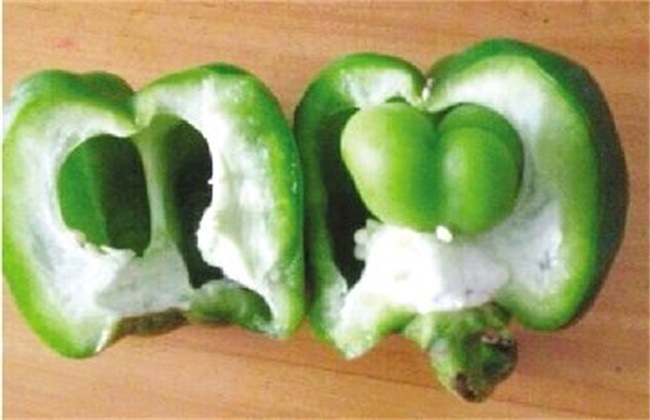
I. Causes of deformed fruits
Deformed fruits are one of the common physiological diseases of bell peppers during growth, mainly manifested as abnormal fruit growth. This is because when the bell pepper is undergoing flower bud differentiation or flowering, it encounters severe weather, such as excessively high or low temperatures, resulting in poor flower bud differentiation, poor pollination quality, or incomplete fruit development.
II. Prevention methods
1. Fertilization
When planting bell peppers, be sure to pay attention to the supply of fertilizer, especially the supply of trace elements such as boron and calcium, so as to avoid the occurrence of deformed bell peppers. When fertilizing, also pay attention to the application rate of nitrogen fertilizer. Applying too much nitrogen fertilizer will cause excessive vegetative growth of branches and leaves, which will compete with fruit growth for water and nutrients. Because the fruit cannot obtain sufficient nutrients for growth, deformed fruits form. Therefore, the application rate of nitrogen fertilizer must be controlled, and at the same time, increase the application of potassium fertilizer, which can help bell peppers better absorb nutrients, water, and light, and better promote the growth of bell peppers.
2. Temperature control
When bell peppers are flowering and setting fruit, temperature is very important and must not be too high or too low. If the temperature exceeds 35°C or exceeds 32°C for 2 consecutive hours, bell peppers will show poor pollination or poor fertilization, forming deformed fruits. Around the Spring Festival, also pay attention to changes in temperature and ground temperature. If it is too low, it will also affect fruit setting in bell peppers. Applying biological fertilizer around the Spring Festival can promote normal fruit setting in bell peppers.
3. Controlling excessive growth
If the plant grows too vigorously, the probability of deformed fruits will increase. By spraying growth regulators and pruning branches and side shoots, the normal growth of bell pepper fruits can be ensured. If bell peppers cannot set fruit, it may also lead to excessive plant growth. Spraying chlormequat and adjusting the temperature can ensure normal plant growth and facilitate fruit development.
The above is an introduction to the causes of deformed fruits in bell peppers and prevention methods. We hope it can help you. If you want to learn more related knowledge, please follow us.