How to fertilize asparagus pea? These methods you need to master
The asparagus pea discussed here refers to the young shoots of chayote, which is generally recognized, and I hope this does not cause any misunderstanding. Generally, the cultivation and fertilization of asparagus pea has its own characteristics, and it is also different from growing other vegetables or growing chayote, with different fertilizer requirements during cultivation. Therefore, I want to introduce the physiological characteristics of asparagus pea, along with methods for fertilization and high yield.
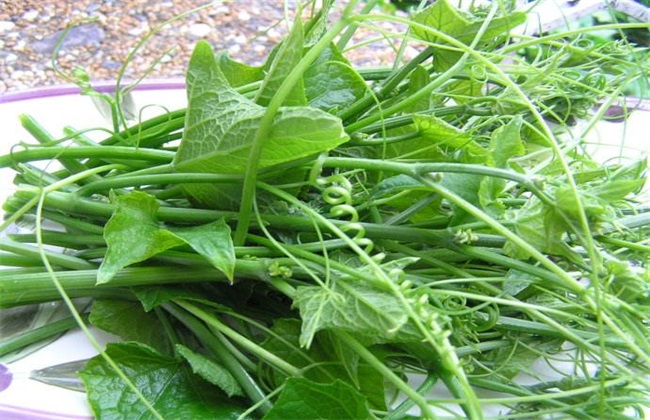
I. Growth characteristics
Asparagus pea is mainly grown from seed, primarily planted on barren hills and in open fields. It is generally planted in the open ground, and can also be cultivated under protected structures. The main variety is the young shoots of chayote; its root system is not deep and is mostly distributed around the roots. What is mainly harvested is the young stems of the plant, and harvesting can continue throughout the growing period.
II. Fertilizer requirements
The growth of young stems requires compound fertilizer with more nitrogen. Nitrogen fertilizer can make the leaves and young stems of the plant become dark green and tender, and it is also necessary to ensure the necessary photosynthesis to produce nutrients. Potassium fertilizer can be applied sparingly; potassium fertilizer mainly strengthens roots and stems, and applying too much potassium fertilizer will cause stem hardening, so a little more can be applied in the early stage of planting and less later. Farmyard manure is the best nutrient component for leafy vegetables, containing diverse nutrients.
III. Fertilization methods
For seedling raising, the base fertilizer is entirely farmyard manure. For open-field base fertilizer, it can be applied only on the ridge surface. Topdressing is mainly used from after the seedlings emerge through the entire growing period. Topdressing is mainly applied in furrows, opening furrows around the ridge surface, and then applying evenly in the furrows. Or fertilizer can be directly applied diluted with water, but this may affect the roots and the taste of the young stems. It is still best to apply it in furrows.
IV. Fertilization timing
Base fertilizer is applied before sowing or before open-field planting. It can be applied in a larger amount, but after mixing the fertilizer with soil, it is still necessary to cover it with 2 cm of soil before sowing to avoid damage. Base fertilizer is generally applied at 1000 jin of farmyard livestock manure per mu, or cattle manure plus soil composted fertilizer. Then there is topdressing. Topdressing can be used continuously in the seedbed, about once a week, to promote growth. For one topdressing, farmyard manure is applied diluted with water; urea should be applied in furrows to avoid burning, and one topdressing is about 100 jin per mu. Whether it is trellis cultivation with continuous harvesting or seedbed cultivation for harvesting young seedlings, topdressing is applied multiple times in the same way.
Fertilization should be carried out according to growth characteristics and the main fertilizer needs of the harvested part. With this targeted fertilization, you can achieve twice the result with half the effort. This is most beneficial to the growth of asparagus pea, and the fertilizer can fully play its role. These are the high-yield fertilization methods for asparagus pea.