What are the growing environment requirements for sword bean cultivation?
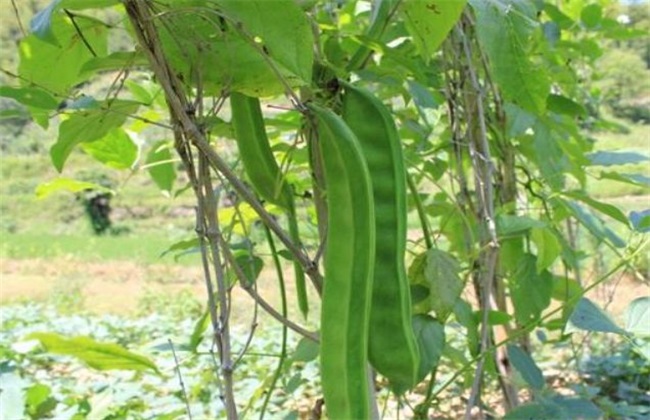
Sword bean is a twining herbaceous vegetable in the legume family, and generally its tender pods and seeds are eaten. It is distributed in the area south of the Yangtze River and is grown in subtropical and tropical regions. It can also be used as green manure and livestock feed. Growing sword bean has relatively strict environmental requirements and certain limitations. Generally, it has its own requirements for climate, temperature, water, fertilizer nutrients, light, and soil, and it can only grow well under suitable conditions.
1. Climate
It can complete its growth process, flower and set pods, and grow normally only under tropical and subtropical climate conditions. In cold regions there is no germination, and even if it germinates, its growth and development are incomplete, or flowers and pods drop. When growing it in subtropical regions, attention must also be paid to the effect of a late spring cold snap, and sowing should be appropriately delayed.
2. Temperature and humidity
It likes warmth and tolerates heat. Seeds germinate above 18 degrees, and 18 to 28 degrees is most suitable for germination and leaf growth. The best temperature during flowering is 25 to 30 degrees, and the temperature during pod setting should not be lower than 20 degrees and should not exceed 35 degrees. Before the seedlings emerge from the soil during the seed stage and during the seedling stage, soil humidity should be maintained at about 70%; during flowering, humidity should be reduced to 40%; during the fruiting stage, maintaining 50% is fine.
3. Fertilizer nutrients
Do not water before flowering, and carry out one intertillage to avoid flower drop. Apply topdressing once during the period of vigorous leaf growth, applying 60 jin of compound fertilizer per mu, mainly nitrogen fertilizer. After pod setting, apply topdressing again, applying 30 jin of superphosphate and 20 jin of potassium dihydrogen phosphate per mu, with less nitrogen fertilizer. During the peak pod-setting period, spray fertilizer 2 times, and at the same time remove the growing tips and thin branches to concentrate nutrients for pod setting. You can spray compound fertilizer once as a later topdressing to extend the pod-setting period.
4. Light
Sword bean likes strong light and needs to receive long periods of light. Especially during flowering and pod setting, it needs a large amount of light; insufficient light will cause flowers and pods to drop. Generally, suitable climates and suitable seasons can meet this, but planting must not be too dense. Appropriate plant and row spacing should be maintained so that it can fully receive light and improve light utilization.
5. Soil
The planting soil should have good water and fertilizer retention. Because growth temperatures are high and light is strong, transpiration is rapid, so water retention is very important. It likes fertilizer during growth, and fertile soil is the best. The soil must not be compacted, because compaction restricts root growth and the absorption of water and nutrients. After rain, roots are prone to rotting. It must not be saline-alkali land, where seeds and seedlings easily die. It must not be low-lying land, where respiration and growth easily become abnormal.
The environmental requirements for growing sword bean should be adjusted and improved according to its needs to achieve the best growing environment, so that growth will be better. Although it can survive with extensive management and careless planting, artificial cultivation is meant to provide the best growing conditions. I do not know what you think, but you can refer to this and adjust it in combination with your own understanding.