Detailed Explanation of Key Field Management Techniques for Open-Field Cowpea
Cowpea is a common vegetable planted in spring in southern regions and harvested in summer and autumn, suitable for all ages. Nowadays, facility cultivation such as greenhouses can be used, but the microclimate artificially created by facilities still does not produce cowpeas with as good taste and quality as those grown in natural environments. In recent years, organic vegetables have been highly praised, so today we will still introduce the field management of open-field cowpea cultivation, the earliest cultivation method. Without facility conditions, how should cowpeas be managed.
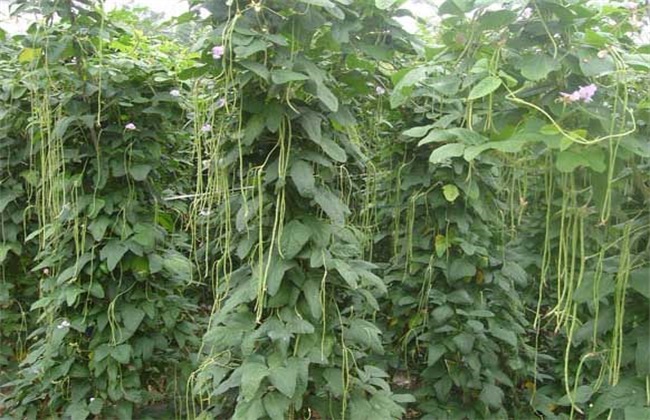
I. Controlling Fertilizer and Water
Cowpea has a well-developed root system and strong fertilizer absorption capacity, so less topdressing and more base fertilizer can be applied. Besides base fertilizer, topdressing is the key point of field fertilizer and water management. In the early stage, seedlings should be hardened, with less watering, to encourage the root system to grow downward and absorb water on its own, promoting root development. After seedling hardening and the end of the recovery period, irrigation should be carried out promptly once to ensure rapid plant growth. Do not water during flowering to prevent flower drop. Before flowering, carry out one deep irrigation to ensure the necessary water for the plant during the flowering period. The pod-setting period is the peak of water and fertilizer demand. Topdressing can be determined according to the number of pods set, roughly 1 to 2 times of topdressing, with 300 jin of compound fertilizer per mu each time. Nitrogen fertilizer can be applied less, as legumes can fix nitrogen. Water once a week to ensure the water needed for nutrient transport and pod setting.
II. Adjusting the Plant
When the vines grow to 30 cm and begin to spread, stakes should be set up promptly for the plants to climb. Then begin retaining side branches: remove all side buds below the first inflorescence on the main vine, do not let them sprout vines, and keep the side branches above. When the retained branches grow to about the height of the trellis, pinch off the growing tips and do not let them grow further. Also, during the process of vines climbing upward, tie the vines to fix and guide growth.
III. Light and Temperature
The suitable growth temperature for cowpea is between 20 and 30 degrees. Too low will cause poor growth, and too high will easily lead to transpiration and water loss, stopping growth. At 35 degrees, it can still flower and set pods but with lower quality and possibly incomplete development. Below 15 degrees, growth is only slow, but when the temperature drops below 5 degrees, there may be a risk of frost damage. Light requirements can generally be met in summer, but if planted too early, light may be insufficient. Generally, the flowering and fruiting period requires a longer light duration for good growth. The number of hours required for plant growth can be reduced.
IV. Pest and Disease Control
The main disease is cowpea mosaic virus, a viral infection disease, which generally harms the pods, mainly damaging seedlings. It can be controlled by spraying 40% omethoate once a week, spraying several times. Sooty mold occurs frequently in the rainy season, mainly on the pods, and can be controlled by spraying a 1000-fold solution of 50% carbendazim. The main pest is the bean pod borer, which mainly bores into flowers and tender pods, causing flower and pod drop. It can be controlled using Avermectin and Bacillus thuringiensis.
The above are the management tasks that should be done for open-field cowpea cultivation. These routine management practices need to be carried out according to the characteristics of cowpea. I hope the above content is helpful to those in need and provides a reference for everyone. Production should be combined with actual conditions. Welcome to follow for more content in the future.