How to Prevent and Control Cucumber Gray Mold? A Detailed Guide to Practical Methods
Cucumber is one of the common vegetables in daily life and is grown nationwide, but during cultivation it often suffers from insect pests and diseases, and gray mold is one of the common diseases. If not controlled in time, it often causes cucumber fruits to become infected and rot. So how should cucumber gray mold be prevented and controlled? Let's take a look.
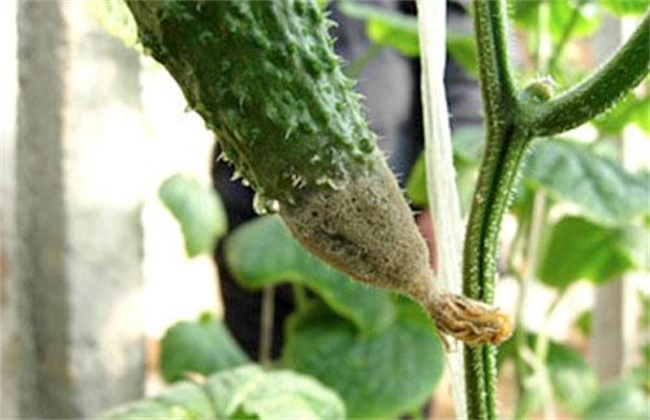
1. Disease symptoms
Gray mold mainly infects the cucumber fruit, and sometimes also infects the leaves. When it develops on the fruit, the typical symptom is that infection and rotting start from the remnant flower, with a gray-black mold layer on the surface. On affected leaves, infection starts from the edge, producing V-shaped lesions. To correctly identify gray mold, you can look at three aspects: first, there are brown lesions; second, the lesions are V-shaped; third, there is a gray mold layer on the surface of the lesions, among which the gray mold layer is the main difference between it and other diseases.
2. Causes of the disease
Gray mold is typically associated with low temperature and high humidity. When the temperature is too low, especially when the nighttime temperature is below 15°C, its root system is hindered and its absorption capacity declines. If it stays below 12°C for 3 consecutive days, the root hairs will shed, leading to poor nutrition in the aboveground parts and yellowing leaf edges. At this time, pathogens take the opportunity to invade and trigger the disease, and the fruit may also show fruit abortion. In addition, watering too much or using the wrong watering method, causing waterlogging in the field or relatively high humidity, will also create favorable conditions for gray mold. In addition, planting density that is too high and a field that is too closed, resulting in poor field ventilation and light penetration, can also lead to this disease.
3. Preventive measures
Try to raise the temperature as much as possible and keep the nighttime temperature above 15°C. Only in this way can the seedlings safely get through cold nights and avoid infection by gray mold. At the same time, increase light penetration to reduce the probability of gray mold occurring. When watering, pay attention to the amount of water; a single watering should not be too much. Drip irrigation or micro-sprinkler irrigation can be used, which can effectively control watering, or high-ridge cultivation can be adopted, which can not only effectively raise the soil temperature but also reduce the humidity around the root system. During cultivation, control the planting density well, and appropriately prune branches and leaves to increase ventilation and light penetration and reduce the probability of disease.
4. Treatment methods
The principles for preventing and controlling gray mold are to promptly remove diseased residues, raise the temperature, and strengthen ventilation. When the disease occurs, medication can be used for treatment. After the disease occurs, immediately carry out comprehensive disinfection of the seedlings, and spray treatment with chloroisocyanuric acid can be used. On the second day after spraying the pesticide, a follow-up control treatment must be carried out with a systemic pesticide with strong absorption. Pyrimethanil suspension concentrate and boscalid can be selected, with good results.
The above is an introduction to the prevention and control methods for cucumber gray mold. We hope it can help you. If you want to learn more related knowledge, please keep following us.