A detailed guide to bitter lettuce seedling cultivation: master the key points to grow strong seedlings
Bitter lettuce is a wild vegetable commonly found in the Nanjing area. It is a biennial or annual plant of the Asteraceae family. It tastes bitter but can clear heat and detoxify, and has certain medicinal properties, so it is deeply loved by all kinds of people, which makes its cultivation value relatively good. To grow it artificially, you must first sow seeds and raise seedlings, and this step is an important part of cultivation. So now I will introduce the seedling cultivation method for growing bitter lettuce.
1. Seed selection
Before planting bitter lettuce, you must first buy seeds. For the seeds, generally choose an excellent variety with good genetic traits, strong resistance, and strong adaptability, and with quality that the market demands, such as Dutch Tianxiang, which has few pests and diseases and good drought tolerance, cold tolerance, and heat tolerance, making it a suitable variety for cultivation.
2. Land selection and land preparation
Keep away from other planting areas of the same crop to avoid disease spread. Then the land should be flat but higher than paddy fields; it is best not to plant in fields. Relatively low-lying areas are prone to water accumulation. The soil should be deep, loose, well-aerated, and fertile-retentive sandy loam. To prepare the land and make a seedbed, first deep-plow the soil, then sun-dry the soil for 1 week, after that apply base fertilizer, and rotary-till together to mix the soil. Then you can artificially make a ridge surface 1.3 m wide, unlimited in length, and 5 cm high. After spraying pesticide on the surface, leave it for 3 days before sowing.
3. Sowing
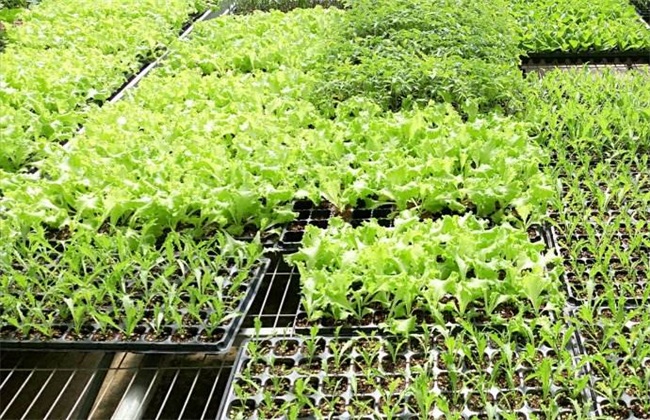
Before sowing, you can sun-dry the seeds to sterilize them, or first soak the seeds in 50°C warm water, but you must keep stirring, and take them out after 10 minutes. Then soak them in about 30°C warm water for one to two days, then take them out and drain them, wrap them in a clean wet cloth, and put them in a constant-temperature cabinet to promote germination, keeping the temperature at 20 to 25°C. Generally, after one day and one night of germination promotion, they will sprout. Rinse the seeds once every day to avoid mucus sticking to them and causing seed rot. When sowing, dig small holes on the ridge surface and sow; each hole can be about 3 cm deep, about 5 cm wide, then the spacing between holes should be about 2 cm, and sow one to two seeds per hole. Cover with about 1 cm of soil, or you can cover with culture substrate. After covering, spray water, and be sure to spray thoroughly all over.
4. Seedling stage
After emergence, when about 70% of the seedlings have come out of the soil, begin checking to see whether some seeds have rotted and will not emerge, and then reseed those that have not emerged. For those that have already emerged, first check whether there are pests or diseases; if any are present, pull them out, and also use fungicides and insecticides. In addition, for weak seedlings, apply more fertilizer and water to promote balanced growth. You can set up a shade net on the seedbed to protect the young seedlings, or start applying nitrogen fertilizer water to supplement nutrition when two leaves have grown. The growing humidity needs to remain moist at all times, and the temperature should be kept between 16 and 25°C.
The key points for bitter lettuce planting and seedling cultivation are the main directions above, and there are more detailed things to pay attention to among them. So this article can serve as reference for everyone, and then combined with your own experience, to better complete the work of sowing and raising bitter lettuce seedlings.