Detailed Explanation of Field Management Techniques for Asparagus Bean
Asparagus bean is a perennial wild famous vegetable with well-developed vines, which can be processed into agar and has high nutritional value. It can also be planted and sold with considerable economic value. So now it can also be artificially propagated and planted. Throughout the entire planting process, it can be found that planting is just one step, while management runs through the entire growth cycle, so the final quality and yield mostly depend on management.
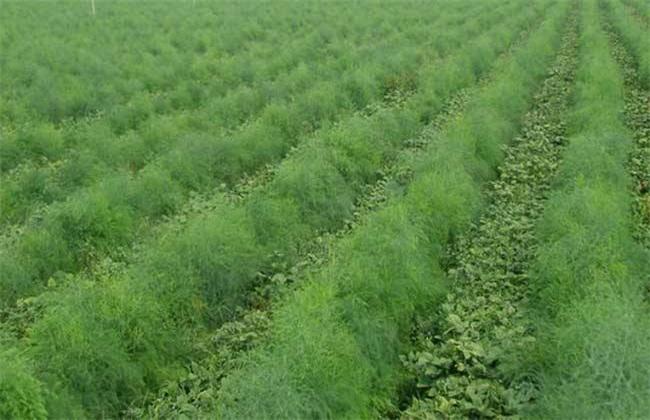
I. Thinning and Weeding
After the seedlings emerge, weeds that appear among the seedlings should be pulled out promptly before they grow large. Whenever weeds appear, pull them out at any time. As for thinning, thin once after the seedlings have all emerged, pull out diseased and pest-damaged seedlings, and transplant weak seedlings separately, or directly thin them out. Combined with weeding, you can loosen the soil between rows with a small stick, which is beneficial for growth. When the seedlings grow to about 10 cm tall, the second thinning should begin. Seedlings with fast growth can be transplanted to the field first, leaving the others to continue growing. Each thinning needs to be carried out after watering to avoid damaging the roots.
II. Light Management
Seedlings need a certain amount of light, but because they are delicate themselves, external light is too intense for the seedlings. Therefore, an arched shed can be built over the seedbed, and a shade net can be placed on the arched shed to block strong light and reduce sunlight exposure. This can prevent sunburn and water loss. The shade cover should remain until it is time for hardening off the seedlings, and only then can it be removed.
III. Fertilizer and Water
The root system of asparagus bean is relatively weak, so its drought tolerance is also relatively weak. Sufficient moisture must be maintained for it to grow well. Therefore, after the seeds emerge, they should be watered every day to keep them moist. Then when they grow to 2 to 4 cm, start applying some human and livestock manure fertilizer, but it must be diluted with water and must have been disinfected and fully decomposed. The fertilization amount per mu is between 50 jin and 100 jin. Mainly apply nitrogen fertilizer, and do not use chemical fertilizers for now; you can add some superphosphate and potassium nitrate fertilizer. Then when they grow to 6 cm, apply topdressing again, basically the same as the first application.
IV. Planting Soil
The soil chosen at the beginning must be deep and fertile soil, but sometimes natural conditions are not sufficient, so the soil must be improved before planting. For example, dig away gravel in the soil and replace it for planting, dig in some fertile soil, then add leaf compost and mix it together, and test a certain pH to ensure it is suitable before planting. When trace elements are lacking in the soil, foliar spraying should be done in time. If soil compaction occurs during the middle of planting, loosen the soil promptly to maintain good soil structure.
Generally, planting vegetables requires considering the above management content, but when planting asparagus bean, the specific management content we need to do is somewhat different and needs to be adjusted according to the growth characteristics of asparagus bean. Only with such targeted management can management work be done well.