Detailed Explanation of Key Technical Points for Cabbage Seedling Stage Management
Cabbage, also known as lotus white or bao cai, is a common vegetable in southern winters and a commonly consumed vegetable, loved by more people for its tender and fresh taste. Generally, we start sowing and planting in autumn, and the key period of planting is the seedling stage. The survival and growth at the seedling stage directly affect the later growth of the vegetable and the yield, so seedling stage management is very important in the planting process. Next, we will introduce how to manage the seedling stage.
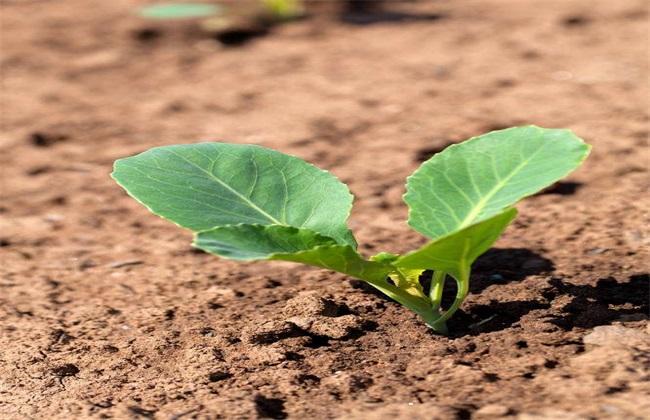
I. Emergence
After sowing, if the temperature and moisture are generally sufficient, the seedlings will emerge in about half a month. After the seedlings emerge from the soil, the first step is to remove weeds among the seedlings to avoid competition for nutrients, and then remove diseased seedlings. Weak and small seedlings may be discarded, or transplanted to a new seedbed to provide them with better care separately and help them become established. Afterward, when there is enough space between the seedlings, they can be transplanted in batches when they grow two true leaves. After the first batch is transplanted, it helps the later seedlings grow robustly.
II. Temperature and Humidity
Newly emerged seedlings generally need a small arch shed for insulation. At first, the temperature is best kept between 18 and 24 degrees. After the seedlings emerge evenly, it can be maintained at around 15 to 20 degrees. When they begin to grow leaves, the arch shed can be removed to allow natural temperature, which can maintain good leaf growth. Environmental humidity should be reduced to about 50% after emergence, keeping the surface dry. High humidity easily causes damping-off disease. Before removing the arch shed, watering should be done in small amounts and multiple times, and both ends should be opened every evening for ventilation. After removal, hardening off should be carried out, and during the hardening-off period, watering should be reduced.
III. Soil and Nutrition
The nutrients originally present in the soil, some fertility, special minerals, and so on, can meet the nutritional needs of seedling stage growth. However, for most soil, sustained fertility still requires fertilization to fully meet the needs of seedling growth. Therefore, in addition to base fertilizer, after hardening off at the seedling stage, some nitrogen fertilizer should be applied, diluted chemical fertilizer. After transplanting and the recovery period, more topdressing also needs to be supplemented, about 300 jin per mu. Farmyard manure can be used, but irrigation should be carried out before use.
IV. Disease Control
The disease most likely to occur at the seedling stage of leafy vegetables is damping-off disease. Once damping-off occurs, it mostly begins before the seedlings emerge from the soil and can continue throughout the entire seedling stage. It mainly harms the base of the seedling stem, causing rot from the stem base, directly killing the seedlings and making them fall over. It can even rot the seeds so that no seedlings emerge. When sowing, every 1 kg of seeds can be mixed with 0.5 to 1 g of 99% hymexazol soluble powder for seed dressing, and 99% hymexazol soluble powder can be used to spray the seedbed. Diseased plants should be removed promptly, then sprayed or drenched at the roots with a 3000 to 5000 times dilution of 99% hymexazol soluble powder. 2 to 3 days before transplanting, apply the pesticide once more for better control effect.
In the cabbage planting process, the seedling stage is the key period and a management period that should be taken seriously. Therefore, today we briefly introduced the main aspects of seedling stage management. In actual management, these aspects can be refined to better carry out management work.