Key Field Management Techniques for Chayote
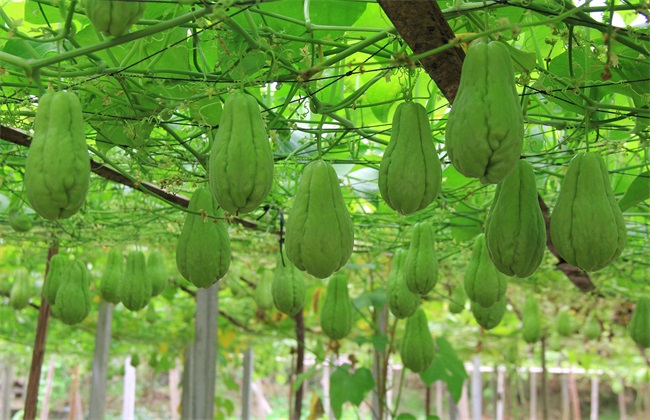
Chayote is a perennial vegetable of the Cucurbitaceae family that can also be eaten as a fruit. It is generally planted most in southern regions, where it grows well. It contains a variety of trace elements, so it is loved by many people. Growing chayote depends on management, and proper management is the prerequisite for high yields, so today I am writing a dedicated article to introduce the field management techniques for chayote.
I. Temperature and Light
When growing leaves and above-ground plants, the most suitable temperature is maintained between 15°C and 25°C. During the flowering period, maintaining a temperature between 20°C and 30°C results in good flowering. Then there is the temperature during the fruiting period: the lowest temperature is around 20°C, and the highest is 32°C. Any lower and it cannot set fruit; any higher and growth stops and fruit drops. Chayote growth requires sufficient light intensity and hours. Generally, open-field growth in summer can reach normal growth levels, but greenhouse planting allows self-adjustment.
II. Fertilization and Irrigation
Apply about 2000 jin of base fertilizer per mu. Applying sufficient base fertilizer is beneficial to growth and can avoid nutrient deficiency during the seedling stage. If the seedlings are observed not to lack nutrients during the seedling stage, then no fertilization is needed; after the seedling recovery period, just irrigate once. The main topdressing is used during the flowering and fruiting period. Generally, apply 100 jin of a fast-acting, well-balanced compound fertilizer per mu at a time. Throughout the fruiting period, topdress approximately once a month. Because fruits are set in many batches, a lot of nutrients and water are needed, so during the fruiting period irrigate once every week, keeping the soil consistently alternating between dry and moist. However, during the flowering period, water less to avoid flower drop.
III. Cultivation and Weeding
After planting, during the seedling recovery period, after watering, weeds in the soil germinate. Because they are too small, manual pulling cannot keep up, so herbicides must be sprayed promptly. Choose low-toxicity pesticides that do not harm the seedlings, and the weeds will die thoroughly. In the vigorous growing summer, weeds grow quickly and block the rows, closing up the space. Water and pull them promptly to reduce humidity. Generally, after rain the weeds flourish and the soil becomes compacted; combine this with one intertillage and weeding, and the weeds can be turned into the ground as green manure.
IV. Plant Adjustment
When growing vine vegetables, the plants must be adjusted, because the branches and vines grow too vigorously and branch well. In addition to the main vine, keep 5 to 6 strong side branches. All other excess branches, weak branches, overly dense branches and leggy branches should be thinned out. Then, before the flowering period, remove the growing tips of the retained branches and vines to concentrate nutrients for flowering and fruiting. Then the main task is vine pressing. Vine pressing is done when the vines have grown to 60 cm: dig a shallow trench within 10 cm, place the vines into it and cover with soil to press them down, leaving more than 10 cm of the top exposed. After that, press once every 40 cm or so, for a total of three times.
That is all for the management after planting chayote. I hope that after reading this article, it will be of some help to those who need it. If you want to learn more about agriculture, you can continue to follow the updated content on our website!