When Is the Best Time to Plant Snow Peas? A Full Guide to Planting Time and Methods
Snow peas are a vegetable that many people enjoy eating very much, and there is also a relatively large market demand for them in our country. So now the planting area of snow peas is growing larger and larger, and more and more people are growing them. However, growing snow peas is not as simple as one might imagine. When growing snow peas, you need to pay attention to the timing and the cultivation methods. Today, the editor will give you a brief introduction. Let's take a look below!
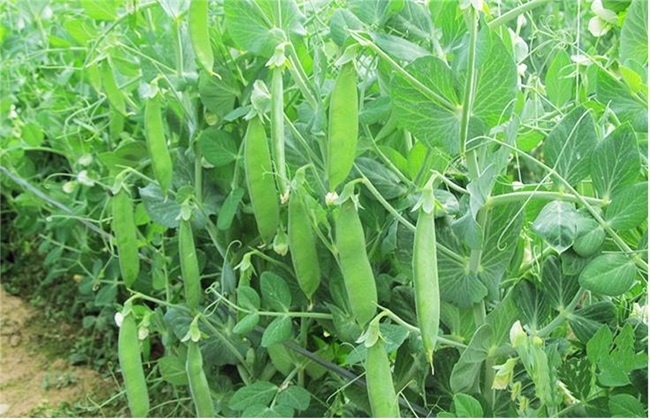
1. Cultivation Requirements
Snow peas are a plant that likes to grow in a cool environment, require long daylight for light, and have relatively poor heat tolerance. So depending on the growing region, the cultivation time will also differ. When grown in the Yangtze River basin, overwintering cultivation is generally the main approach, because the growth cycle is not long. So if sown in autumn, they can also be harvested in autumn. But if in northern regions, then they are sown in spring and harvested in summer. However, snow peas are not very strict about light duration, so as long as the variety is suitable, the cultivation time can be chosen in spring, summer or winter.
2. Cultivation Methods
Overwintering Cultivation
The overwintering cultivation method is mainly used in growing regions such as the Yangtze River basin. It usually uses some plots left idle in winter for planting, most often cotton fields. This is because the harvested cotton stalks can not only be used as supports for the snow peas, but it can also achieve the purpose of improving the soil. The time for overwintering cultivation is generally controlled around October to November each year, and overwintering in the open field is sufficient. Under normal management, harvesting can be done around Qingming Festival the following year. Be sure to pay attention to the sowing time; sowing should not be too early, otherwise the snow peas tend to grow excessively and the plants may freeze to death. If sowing is too late, the soil temperature will be insufficient, root development will be hindered, and vine emergence will be delayed, reducing yield.
Spring Cultivation
If spring cultivation is carried out in the Yangtze River region, then the sowing time should be controlled around February to March each year. Harvesting can be done before the high-temperature weather of summer arrives. If spring sowing is carried out in the north, then the sowing time is around Qingming Festival. According to factors such as temperature and the market, the sowing time can be appropriately advanced, but plastic film, small arch sheds, and other covers need to be used for good coverage. This is because the varieties sown in spring all have relatively short growth periods, and the temperature in the early growth stage is low while the temperature in the later stage is relatively high. So when sowing in spring, focus on varieties with a short growth period and strong cold resistance, and it is best to appropriately advance the sowing time.
Autumn Cultivation
For autumn cultivation, good varieties must be selected, and it is generally carried out around September each year. For autumn cultivation, the growth period is also not very long, generally requiring only about two months. When carrying out autumn cultivation, we can first raise seedlings in summer using a greenhouse, then cover with film in winter to extend the picking period of the snow peas. During cultivation, pay attention to the soil. If the soil is too acidic, then pay attention to applying an appropriate amount of lime powder to neutralize it. Also, the previous crop in the soil should not be snow peas, to prevent serious soil-borne diseases.
The above is a brief introduction to the cultivation time and methods for snow peas. The cultivation of snow peas is relatively simple, and the yield is also relatively high, but you must pay attention to doing a good job in management to ensure planting benefits. That is all for today's introduction. This article is for reference only. Thank you for reading and supporting us.