What are the control measures for wheat fusarium head blight? Read this article to understand
Wheat fusarium head blight, also known as wheat ear blight, rotten wheat head, and red wheat head, can cause seedling blight, ear rot, stem base rot, and stalk rot. It can affect plants from the seedling stage to the adult plant stage, and the most serious is ear rot. So what symptoms appear when fusarium head blight occurs? How should it be controlled? Let's learn about it together.
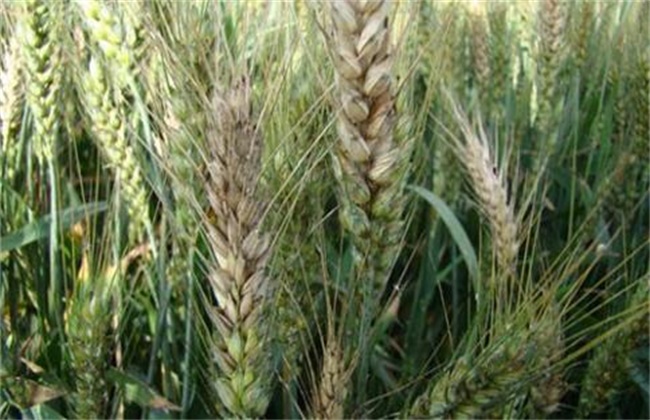
I. Disease symptoms
1. Seedling blight
It is caused by infection by pathogens in seeds, soil, or diseased residues. First, the buds turn brown, and then the root crown rots. In mild cases, the seedlings become yellow and wet; in severe cases, they die. When humidity is high, dead seedlings may also produce pink mold-like growth.
2. Ear rot
When wheat is flowering, water-soaked brown spots appear on the ears and gradually spread to the entire ear, causing the spikelets to turn yellow. When humidity is high, pink gelatinous mold layers form on the lesions. Later, small blue-black grains appear over an area, with a raised feel when touched by hand, and they cannot be wiped off. They also spread to the rachis, causing the ears above the diseased area to form blighted white ears.
3. Stem base rot
It can occur from seedling emergence to maturity. After the stem base is damaged, it turns brown and rots, until the whole plant dies.
4. Stalk rot
It generally occurs at the 1-2 nodes below the ear. In the early stage, water-soaked chlorotic spots appear on the leaf sheath, or gradually expand into irregular light brown or reddish-brown spots. In severe cases, the parts above the diseased area turn yellow, and sometimes the ears cannot emerge in time or emerge as yellow blighted ears. When moist, pink mold layers appear on the diseased parts.
II. Control measures
1. Choose varieties with strong disease resistance
Although there are currently no immune varieties, there are some disease-tolerant varieties. Growers can choose suitable local varieties according to local conditions.
2. Agricultural control
Reasonable irrigation and drainage are needed. Wet fields should have ditches opened for drainage. After harvest, the field should be cleaned in time to reduce sources of inoculum. Sow at the appropriate time to avoid rain during the flowering period. Fertilize reasonably, advocate the use of compost fermented with effective microorganisms, adopt formula fertilization techniques, avoid excessive application of nitrogen fertilizer, and improve plant disease resistance.
3. Chemical control
Before sowing, treat seeds with chemicals. During the flowering period, spray carbendazim or thiophanate-methyl for prevention, spraying once every 5-7 days. Later, it is also possible to spray chlorpyrifos, pirimicarb, pirimicarb, and potassium dihydrogen phosphate solution, with good control effects.
The above is an introduction to control measures for wheat fusarium head blight. We hope it can help you. To learn more related knowledge, please follow us.