Detailed Explanation of the Key Cultivation Techniques for Daylily
Daylily is what we commonly call yellow flower vegetable (huanghuacai) in daily life, and its planting area in China is very large. Daylily is a very traditional vegetable in China, with a fairly long history of consumption in the country. Therefore, current market demand is also very large, and naturally more and more people are growing it. So how should daylily be cultivated? Below, the editor brings you the cultivation techniques for daylily. Let's take a look together!
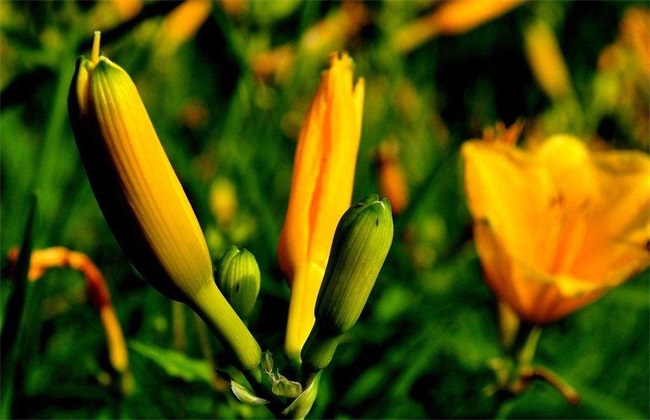
1. Soil Selection
The climate of the daylily's place of origin is relatively warm, but it nonetheless has strong cold resistance. Although the stems and leaves of the daylily wither and die in autumn, its roots overwinter within the soil. Although its adaptability to soil is very strong, if you want to ensure high yields, then you should still choose fertile, deep, loose soil with strong water- and fertilizer-retention capacity for cultivation. It is best to have some shading capacity to provide daylily with a good growing environment. After selecting the soil, do a good job of land preparation, carrying out deep plowing and disinfection to eliminate pathogens in the soil and prevent harm to daylily growth.
2. Propagation Methods
The propagation method for daylily is mainly division propagation, usually starting when the old shoots of the plant grow to about 10 cm in spring. When dividing, generally at least two corms should be used as one plant for planting. When planting, pay attention to controlling the planting density, with a plant-to-row spacing of about 10*15 cm. Then control the size of the planting holes according to the size of the corms, with a depth just enough to bury the corms. Before planting, each planting hole should be given sufficient farmyard manure, with the amount controlled at about 1-2 jin. Then after planting, water thoroughly to improve the survival rate.
3. Field Management
The growth ability of daylily is relatively strong, and during planting, management can be appropriately extensive. However, there are also many things we need to pay attention to. First is to do a good job of intertillage and earthing up. Because the roots of yellow flower vegetable are fleshy roots, soil fertility and looseness have a very large impact on root development. Therefore, during the planting period, we should carry out reasonable intertillage according to the soil's degree of compaction. Then do a good job of topdressing, with at least three topdressings throughout the entire growth period, with manure applied at each important stage such as emergence, bolting, and budding. Finally, control water well, keeping the soil moist, but do not use too much water. During the rainy season, do a good job of drainage measures to prevent root rot.
4. Timely Harvesting
In the same year of planting, if managed properly and if growth and development are normal, daylily can bloom. However, it should not be harvested in that same year; generally you must wait until the second year to begin, and the flower-picking time should be every morning. When the flowers have not yet fully opened, that is the best harvest time. Under normal circumstances, the yield per plant is about 3 jin. The total yield of fresh flowers is 3000 jin, and 5 kg of fresh flowers can be sun-dried into 1 jin of dried flowers, so the dry yield is about 300 jin. After harvesting, do a good job of processing measures, steaming them, but do not overdo it, and the storage time should not be too long.
The above is a brief introduction to daylily cultivation techniques. The cultivation techniques for daylily are actually relatively simple, and as long as it is managed normally, the benefits are very good. That is all for today's introduction. This article is for reference only, and I hope it can be helpful to everyone!