How to prevent and control pepper anthracnose? These methods you need to know
Peppers suffer from different diseases at different stages. Here I will mainly give a brief introduction to pepper anthracnose. This disease mainly infects mature peppers or those nearing maturity after color change. After all the hard work of growing them, you absolutely cannot let them be attacked when they are almost mature and ready for harvest. Let's see how to deal with it and eliminate the pathogen.
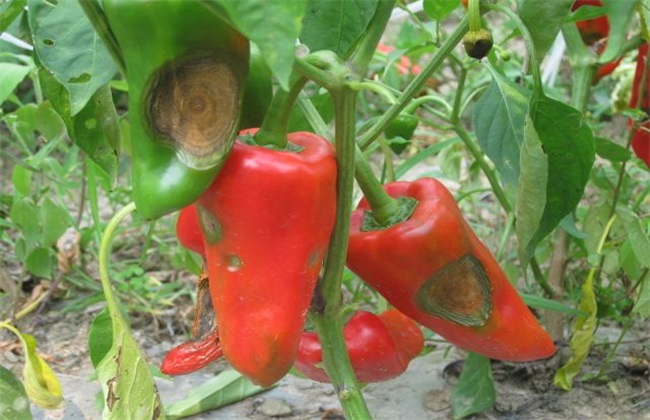
I. Symptoms of infection
It infects mature fruits and generally occurs easily as a complication after sunscald. At first, round lesions with concentric rings appear, and red granular material forms on the lesions, gradually turning black. The lesions gradually become sunken. In cloudy and humid weather, red sticky material appears, which turns into a thin grayish layer after drying. Occasionally old leaves are also infected, showing round brown lesions with small black dots, eventually causing leaf drop. Brown irregular lesions appear on stems and stalks, drying and cracking, which may also be infection.
II. Occurrence and spread
The pathogen overwinters as conidia on the seed coat, or the mycelium enters the inside of the seed to overwinter. In spring, seeds can directly carry the pathogen and spread it, becoming infected as soon as they emerge from the soil. At the same time, conidia can also spread through wind and rain, irrigation, and water sources, continuously reproducing and spreading. The pathogen also grows well at high temperatures. Air humidity above 70%, excessive application of nitrogen fertilizer, and prolonged strong sunlight all easily induce the disease. The pathogen generally enters through wounds, young tender parts, and natural openings.
III. Treatment measures
1. Seed selection and seed soaking
When saving seed, pay attention to testing for disease. Peppers should be picked from plants with no disease occurrence to obtain seeds. The pepper varieties used for seed collection should have strong disease resistance and good adaptability, especially high-quality disease-resistant varieties developed through special processing. Before sowing, the saved seeds should all be soaked for 1 hour with a 500-fold solution of 50% carbendazim wettable powder. If disease occurs during later fruiting, a 50% mancozeb wettable powder spray or a 75% chlorothalonil wettable powder solution can be used for treatment, at an interval of two days, for two or three applications.
2. Management and clearing the field
When planting, set appropriate row and plant spacing, with suitable density, good ventilation and light penetration, suitable temperature, and no crowding. Both base fertilizer and topdressing should be applied at the right time and in sufficient amounts to maintain healthy growth vigor and enhance disease resistance. Keep moisture in the field so that the surface soil is dry and the inside is moist, and it will not be infected by the pathogen. Fruits can be harvested slightly early; in any case, they can rely on physiological after-ripening, so there is no possibility of disease, and it is also convenient for storage. After the pepper harvest is completely finished, the plants can be pulled up, and diseased residues collected and burned in a centralized way to eliminate the pathogen and avoid overwintering damage.
There are many triggers for anthracnose. In fact, to do a good job of prevention, you should first focus on eliminating potential triggers. Afterward, if disease still occurs, some chemicals should be used to control it. The best way is still to harvest early; if you harvest early, there is no possibility of damage.