Key Points and Detailed Methods of Prunella vulgaris Seedling Cultivation Techniques
Prunella vulgaris is a common wild grass in southern regions that grows along roadsides, on mountain slopes, and in fields, and it is also a commonly used medicinal plant. It is a perennial herbaceous plant, with the fruiting period between July and August. It has strong adaptability and tenacious vitality. At present, it is mainly cultivated as a medicinal material to create economic benefits. To cultivate it, seedlings must first be raised; once seedlings are propagated, they can be planted over a large area. At present, the main seedling cultivation method is sowing and raising seedlings, and another is propagation by division into seedlings. The seedling cultivation methods are introduced separately below.
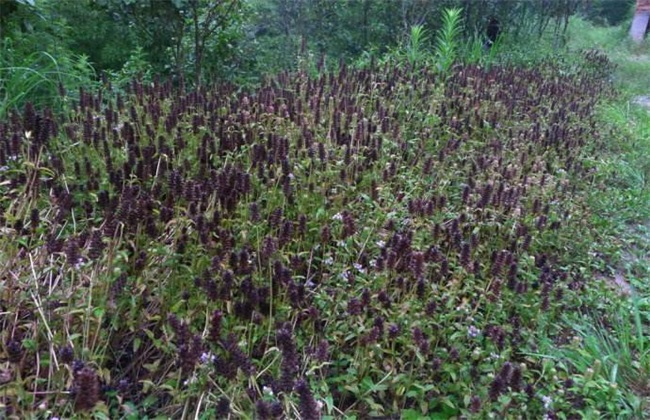
I. Seed Selection and Collection
If planting for the first time, seeds can be purchased. When purchasing seeds, the seed source should be investigated on site, and good, plump seeds should be selected. If planting for the second time, excellent and healthy mother plants of Prunella vulgaris should first be selected to collect seeds, taking disease-free, plump, normally colored mature seeds. After removing impurities, wash them clean, dry them in the sun, and store them sealed.
II. Land Selection and Preparation
The seedling site should preferably be leeward and sunny, with good light, convenient drainage and irrigation, and deep, fertile nitrogen-rich soil. Before establishing the seedbed, the whole field should be plowed, then rotary tilled and finely tilled once, and base fertilizer applied; apply it over the whole field, mix it in, and fine till. Form ridges about 1.3 m wide, with furrows 20 cm wide and 25 cm deep, then spray once with Jinggangmycin fungicide at an appropriate concentration, and sow only after drying in the sun for 3 or 4 days.
3. Sowing
Sowing is suitable in spring and autumn. Generally, for spring sowing, directly dig down about 2 cm from the surface soil of the ridge to form a flat surface, then directly broadcast evenly on the ridge, and then cover the surface soil back. After covering evenly, water thoroughly so that the seeds are pressed and cling tightly to the soil. Then water every morning and evening to maintain 65% moisture content to meet the needs of seed germination. But do not use too much water, for fear of lack of oxygen causing seeds to rot.
4. Seedling Stage
After germination and emergence, the amount of watering can be reduced to avoid diseases at the seedling stage, but water still must not be lacking. After leaves grow, more water should be added again, and some low-concentration compound fertilizer solution should also be added. When the seedlings have emerged uniformly, large and small seedlings should be planted separately in time to avoid competition for nutrients and to prevent small seedlings from falling behind in growth. Some weeds should also be pulled out promptly. One week before transplanting the seedlings, apply a topdressing once, mainly nitrogen fertilizer with a small amount of phosphorus and potassium fertilizer. When transplanting, water thoroughly, and transplant after the soil becomes loose.
III. Propagation by Division
Before sprouting in spring, dig out the old roots of previously planted plants, then divide and plant them. They can be directly planted and raised in the field, with a row spacing of 20 cm. The plant spacing is about 5 cm, using hole planting or furrow planting, but the planting depth is about 8 cm in both cases. Keep them moist at all times to promote rooting; after rooting, seedlings will emerge in about one to two weeks.
Prunella vulgaris seedling cultivation mainly uses the above two methods, but at present sowing is the main method. Sowing and raising seedlings can preserve excellent characteristics, while division grows less well than sowing and is prone to carrying diseases, but division is relatively faster. The seedling cultivation method can be chosen according to one's own needs.