Management Methods and Technical Key Points for the Bulb Enlargement Stage of Onions
When growing onions, the bulb enlargement stage is the critical period that determines yield and quality. Onions generally grow in the middle soil layer, and at this time a series of management tasks must be done well, including water control, nutrition, prevention of bolting, and prevention of pests and diseases. They need more meticulous care than in other growth stages. The key management points after entering the bulb enlargement stage are revealed one by one right away.
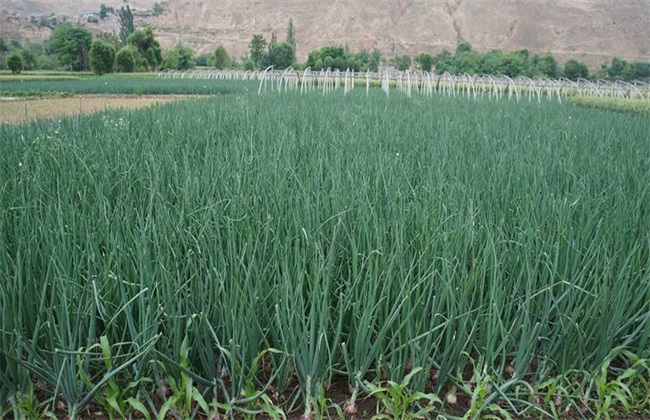
1. Water control
The bulb enlargement stage of onions falls right around the summer solstice, when the outside temperature is high, the daily light exposure is long, and water evaporates very quickly, while the bulbs keep expanding. If the bulbs lack water, they stop growing; if the aboveground leaves lack water, they lodge and cannot recover. Therefore, the number of irrigations and the irrigation volume need to be gradually increased. Generally, water once each in the morning and evening every day, with irrigation once a week. In dry weather, the interval can be shortened and watering can be done freely, but in all cases the soil must be watered thoroughly to keep the surface layer moist. When the onions are nearly mature, stop watering; the outer skin grows and becomes fixed, and watering again will cause the skin to split.
2. Nutrition
Before entering the bulb enlargement stage, apply a topdressing once with a compound fertilizer that has a long-lasting effect, to sustain the needs of the bulb enlargement stage. In the middle of the enlargement stage, foliar topdressing can be done by spraying a trace-element fertilizer to prevent the leaves from turning yellow due to deficiency symptoms. In the late enlargement stage, apply a topdressing once to promote maturity, but nitrogen fertilizer can be applied sparingly, with the main emphasis on applying more phosphorus and potassium fertilizer. This is because onions are mainly harvested for their bulbs, and phosphorus and potassium fertilizer mainly help bulb growth; too much nitrogen fertilizer easily causes over-lush growth, excessive leaf growth, and leaves that grow too tall and lodge easily, reducing photosynthesis.
3. Preventing bolting
Onions are mainly harvested for their bulbs, so the quality of the bulbs must be maintained. Therefore, if early bolting is found in the field, it must be cut off promptly to avoid bolting consuming nutrients and causing the bulbs to become hollow, which would make them useless. Moreover, if bolting consumes nutrients, the bulbs cannot expand and stop growing. Generally, attention must be paid to temperature management; a sudden low temperature easily induces early bolting.
4. Pest and disease control
In summer, onions are most prone to onion maggots and downy mildew. Onion maggots, also called root maggots, mainly bore into and feed on the bulbs and can also cause the leaves to rot and wither, so they must be a key target for control. Generally, 40% phoxim can be used to drench the roots for prevention and treatment. Downy mildew mainly harms the aboveground leaves; the diseased parts turn yellow and rot, growing a large amount of white mold, and it occurs severely when humidity is high. Therefore, during the bulb enlargement stage, 70% chlorothalonil at 600 times dilution can be used for spraying. Root drenching at intervals of about one week, twice in a row, is about enough. Spraying can be done at intervals of three days, and three times in a row can bring it under control.
The bulb enlargement stage is a critical period and also a fragile period that requires special care. The above are the tasks to be done during the bulb enlargement stage of onions; not a single one can be neglected, so that they can safely pass through the bulb enlargement stage and obtain the desired yield and better quality.