What are the key points to note when growing curly endive? Don't miss these tips
Curly endive, also known as bitter chicory, is an annual or biennial herbaceous plant. It prefers cool environments and can be stir-fried or served as a cold dish. It is a delicious food that clears heat and reduces internal fire, and it also has antibacterial, antipyretic, anti-inflammatory and eyesight-improving effects, earning widespread praise. Its cultivation area is also growing larger and larger, so what should be noted when growing curly endive? Let's find out together.
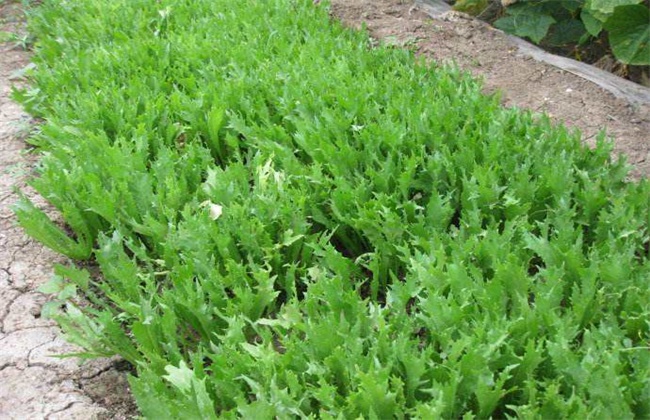
1. Site selection
Before artificial cultivation, you must first understand its growth habits and characteristics in order to grow it well. Curly endive generally prefers shaded environments, is not tolerant of drought, is relatively tolerant of cold, and likes loose soil rich in organic matter; it grows better in slightly acidic soil. Based on the above characteristics, we can choose a relatively suitable site for planting, then carry out plowing and fine cultivation, and according to the soil fertility status, appropriately apply some decomposed organic fertilizer per mu as base fertilizer.
2. Sowing
When sowing, choose seeds with a certain degree of disease resistance and stability. Because curly endive seeds are relatively small, broadcasting can be used when sowing. Dig some shallow furrows on the seedbed surface, evenly scatter the seeds into the furrows, then cover with 1 cm of soil and gently press with your hand, after which you can water. The first watering must be thorough so as to ensure normal seed development. For sowing, generally about 2 kg of seed is used per mu, which can avoid the situation of being too sparse or too dense.
3. Watering and fertilizing
After sowing, water heavily once in a timely manner, and afterward water according to the dry and wet conditions of the soil. If the weather remains continuously rainy, reduce the frequency of watering; if there has been no watering for a period of time, water immediately to avoid curly endive suffering from lack of water, which would affect its taste and reduce returns. Curly endive seedlings emerge 4-5 days after sowing. At this time, field work should be done well. In addition to paying attention to the dry and wet conditions of the soil, fertilizer should also be applied appropriately. Generally, organic fertilizer is sufficient at the seedling stage. During the growth of the seedlings, fertilizer should be supplemented in a timely manner as nutrients, so as to avoid poor plant growth leading to a decline in yield.
4. Pests and diseases
During the growth of curly endive, pests and diseases are a concern, but improper management can still lead to some common pests and diseases, such as downy mildew, viral disease and aphids. For the control of downy mildew, first strengthen management, water and fertilize reasonably, and drain promptly on rainy days to avoid water accumulation in the field causing changes. When the disease occurs, Keluke and Saidefu can be sprayed for control. For viral disease, a seed dressing method with chemicals can be adopted at sowing to effectively kill pathogens on the seeds. At the same time, pay attention to watering, and spray Virus A, chlorothalonil and Zhibingling emulsion for control when the disease occurs. For aphids, pesticides such as Keyaxing, dimethoate, pirimicarb and fenvalerate can be sprayed in alternation for control, so as to avoid developing pesticide resistance.
The above is an introduction to the key points to note when growing curly endive. We hope it can help you. If you want to learn more related knowledge, please stay tuned to us.