What are the common pest and disease control methods for peas?
Peas are a common vegetable and are deeply loved by people. In rural areas, basically every household grows some, but vegetables are always affected by pests and diseases during cultivation. So what common pests and diseases affect peas during cultivation? Let's learn about them together.
1. Root rot
It can occur from young plants to mature plants, with infection most common during the flowering period. It mainly occurs during the flowering period and mainly harms the roots and stem base of the plant. The leaves of affected plants first begin to turn yellow, gradually spreading toward the middle and upper parts, causing the whole plant to turn yellow and wither. The root system also turns dark brown or earthy red, and root nodules and root hairs are noticeably reduced. In mild cases, the plant is stunted; in severe cases, the root system rots and the plant dies. This disease is mostly spread by pathogens through soil, diseased residues, and seeds, invading through seeds and roots. It is generally more severe in dry years.
Control methods: It can be prevented by seed dressing or soil mixing with chemicals. When the disease occurs, use carbendazim and chlorothalonil as a root drench for control.
2. Brown spot
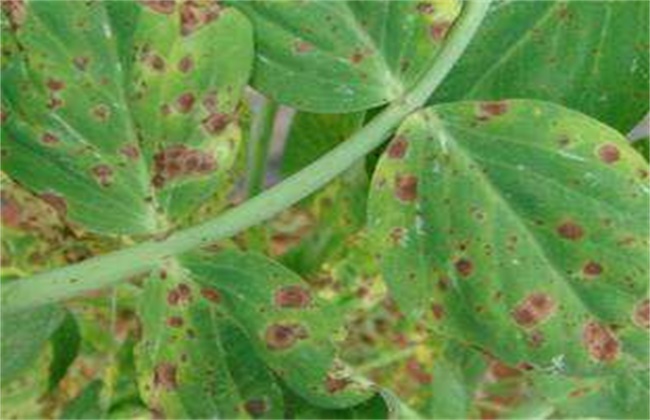
It mainly harms leaves, stems, and pods. After leaves are infected, light purple spots appear. Under high temperature and high humidity, the lesions spread rapidly and cover the entire leaf. Diseased leaves turn yellow and die, and some show brown irregular concentric ring spots. This is mainly because the pathogen overwinters on seeds and spreads through wind and rain. Sowing too early, suffering low-temperature cold damage, or heavy clay soil, relatively high humidity, excessive nitrogen fertilizer, and excessive vegetative growth can also cause this disease.
Control methods: Carry out a 2-3 year crop rotation with non-legume vegetables. At the same time, seeds should be disinfected, and soaking seeds to promote sprouting can increase yield. Sow with appropriate close spacing. In the early stage of the disease, spray benomyl, thiophanate-methyl, or chlorothalonil for control, once a week, for 2-3 consecutive times.
3. Powdery mildew
In the early stage of the disease, small light yellow spots appear on the leaves and gradually expand into irregular pink spots. In severe cases, both sides of the leaves are covered with a layer of white powder, and finally the leaves turn yellow and die. In the later stage, the pink spots turn gray and many small black cleistothecia grow.
Control methods: In the early stage of the disease, spray triadimefon or carbendazim for control, once every 10-20 days, for 2-3 consecutive sprays.
4. Leafminer
Commonly known as arching worm, clamp leaf worm, leaf maggot, etc., it is a polyphagous pest and can host more than a hundred species. On vegetables, it mainly harms celery, Chinese cabbage, radish, etc.
Control methods: When harvesting vegetables, promptly clean up residual plants, fallen leaves, and weeds in the field, and burn them in a centralized manner or bury them deeply to reduce pest numbers. Control can be carried out with 31% abamectin · cyromazine, 5% abamectin emulsifiable concentrate, etc.
The above is an introduction to common pest and disease control methods for peas. We hope it can help you. To learn more related knowledge, please follow us.