How to save eggplant seeds? Master these key methods and points
Eggplants grown in various places, after years of adaptive cultivation, gradually adapt to the local environment and develop different taste qualities, forming what we call local varieties. When planting local varieties, most people need to save their own seeds, raise seedlings, and then plant them. But saving seeds is not a simple matter; it requires considering factors on all sides and operating correctly to ensure good seeds are saved without affecting the next year's planting.
I. Seed selection
When choosing plants for seed saving, select robust plants with many roots and good growth vigor and plant structure. Do not choose weak plants for seed saving, as the saved seeds will be poor. Generally, the seed-saving time is in the middle growth stage of the eggplant, during the period of vigorous growth, nutrition, and plant structure, when the eggplant grows with good quality and the seeds produced will have stronger germination ability. If it is in the late stage, the plant body declines, nutrition is insufficient, and good eggplants cannot be produced, so the seed quality naturally declines.
II. Management
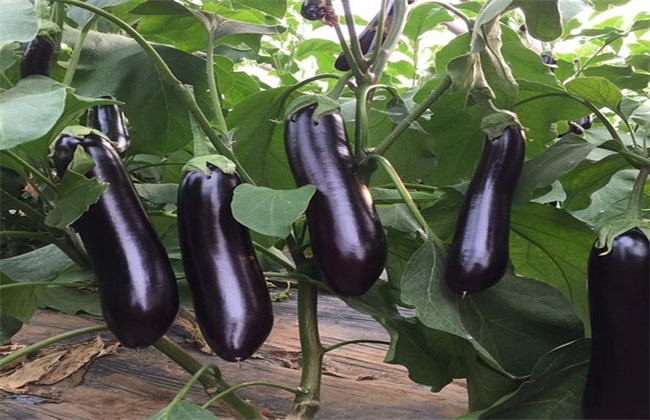
After planting and the eggplants have set fruit, observe the eggplant growth, and during the middle fruiting stage when the plants are vigorous. Select some eggplants that are dark in color, glossy, large, and free from disease and pest damage, and mark them. Give them special care separately, provide sufficient fertilizer and water supply, and promote eggplant growth and development. Spray Bordeaux mixture to prevent pathogen damage, mainly to prevent Phytophthora fruit rot and brown spot disease; spray 70% mancozeb wettable powder 500-600 times diluted solution to control Phytophthora fruit rot, and spray 10% hexaconazole 1500 times diluted solution to control brown spot disease; in addition, control cotton bollworm damage, as the insects bore into and feed on the eggplants, causing fruit drop.
III. Seed collection
Wait until the eggplants are fully mature, then pick the eggplants, gently cut them open, then shake them to take out all the seeds. Remove all empty, discolored, and incomplete seeds, and keep plump dark brown seeds. After taking out the seeds, rinse the seeds to remove some impurities and eggplant edible tissue, then soak the seeds in clean running water for one hour. After taking them out, rub and wash the seeds once in clean water to remove the mucilage on the seed surface. After draining, you can spray some fungicide to disinfect, dry them for half a day, and then store them.
IV. Storage
After the seeds are dried in the sun, store them in a clean glass bottle. The glass bottle is well sealed and airtight, so the seeds can maintain their minimal moisture content, stay dry, and will not be affected by dampness. Being airtight, the seeds cannot contact oxygen, so they can maintain a dormant state well. Moreover, the glass bottle is hard, so insects cannot harm the seeds. For large amounts of seeds, thick plastic bags can be used for storage. But the storage environment needs to be sealed.
The above is the operation process for saving eggplant seeds. Everything needs to be decided based on selecting the best and the good, but in production there may be more issues to pay attention to, and it should be done in light of actual conditions. If this is helpful to you, you are welcome to continue following for updates.