How to Grow Broad Beans for High Yield? A Detailed Guide to Cultivation Techniques
Broad beans are nutritious and serve as both a grain and a vegetable crop. Their stems and leaves are also excellent feed for livestock and an excellent fertilizer. Their root system has a strong nitrogen-fixing capacity, playing a clear role in building soil fertility and ensuring sustained yield increases. However, to achieve high yields in production, several key points need to be handled well. Let's take a look below.
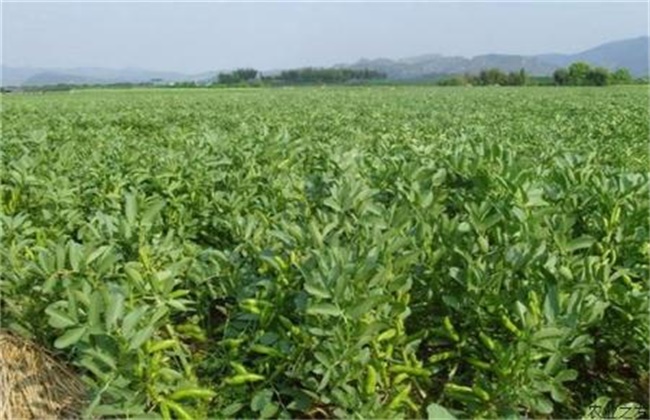
1. Stick to Crop Rotation
One important reason for low yields in broad bean production is long-term continuous cropping. The longer the continuous cropping on the same land, the smaller the individual plants, the fewer the branches, the higher the seedling death rate, the more frequent the pests and diseases, and the lower the yield and poorer the quality. According to research surveys, the growth condition, yield and quality of plants under continuous cropping are all inferior to those under rotation. Taking yield alone as an example, after two years of continuous cropping, the yield drops by about 13%; after five years of continuous cropping, the yield drops by 75%. Conversely, rotation can increase the yield by more than 3 times. Therefore, when planting, the crop varieties and planting areas should be balanced, and rotation should be carried out as much as possible. Avoid continuous cropping on the same land for many years; generally rotate once every 2-3 years to improve the soil environment and reduce the harm of pests and diseases to broad beans.
2. Sow at the Right Time
Any crop must be sown at the right time, and since broad beans have poor cold resistance, the sowing time is even more critical. Many farmers are used to sowing too early, hoping to develop good root clumps before overwintering and grow enough effective large branches to lay the foundation for a high yield. Sowing too early brings three disadvantages: first, excessive growth before the year end makes broad beans less cold-resistant during overwintering, resulting in more severe frost damage and serious yield loss; second, aphid damage is severe, which hinders growth and can also infect the plants with viral diseases through aphids; third, when yellow sand weather occurs, in the northwest region from February to March, when the northwest wind prevails, the wind carries large amounts of dust and sand, and the dust and sand falling on broad bean leaves and flowers cause poor pollination, resulting in no pod formation and large-scale yield reduction. Therefore, the traditional planting habit should be changed, and the sowing time should be appropriately delayed, generally 5-7 days after Cold Dew is suitable.
3. Reasonable Close Planting
When sowing, sow reasonably according to soil fertility and local conditions. If sowing is too dense, the plants' own aeration and light penetration conditions will not only reduce the effective branches per unit area but also inhibit the high-yield performance of the effective branches, greatly affecting yield. Therefore, to ensure high yields of broad beans, many farmers have the habit of pruning, artificially adjusting the density, improving field aeration and light penetration, promoting healthy branch growth, and ensuring appropriate density.
4. Apply More Phosphorus and Potassium Fertilizer
Broad beans themselves have limited nitrogen-fixing capacity, so in production, if no fertilizer is applied, relying only on their own nitrogen fixation can only maintain low yields. Therefore, fertilizer should be appropriately increased so that they can develop branches early, increase branching, and grow strong branches, achieving the goal of high yield. When sowing, sufficient base fertilizer must be applied, with 800-1000 kg of high-quality farmyard manure or 25-30 kg of high-quality compound fertilizer per mu to provide what is necessary for their growth. Their own nitrogen-fixing capacity can meet their growth needs, so nitrogen fertilizer application should be controlled to avoid excessive vegetative growth. However, they are relatively sensitive to phosphorus and potassium fertilizer. If phosphorus and potassium fertilizer are lacking, the plants will be short and branching will be reduced, so when sowing, apply 100-200 kg of plant ash or 20-30 kg of phosphorus and potassium fertilizer per mu, which gives a better yield increase effect.
The above is an introduction to high-yield cultivation techniques for broad beans. We hope it helps you. To learn more related knowledge, please stay tuned to us.