What to Do If Broad Beans Do Not Set Pods? Detailed Control Measures
Broad beans often fail to set pods during cultivation, which seriously affects their growth and yield and brings considerable economic losses to farmers. So what causes broad beans not to set pods? How should they be controlled? Let's find out together.
1. Field Closure
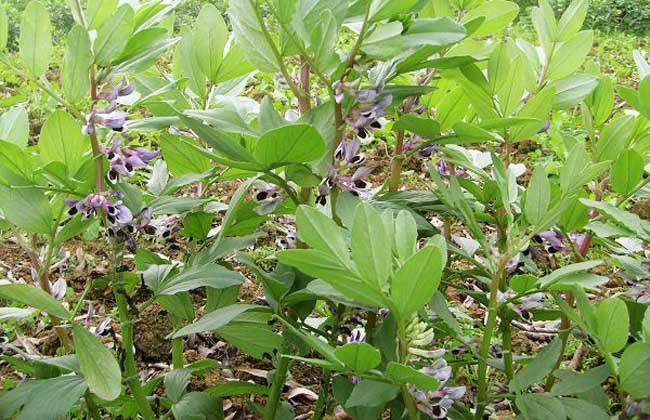
Field closure is a common problem in broad bean production, especially during periods when winter temperatures are on the high side. In the middle and late stages of growth, broad beans carry out vegetative growth and reproductive growth simultaneously. As temperatures continue to rise after the beginning of spring, broad beans keep branching. These branches generally do not set pods, but they take up space and also compete with effective branches for nutrients. Moreover, the lower part of the plant basically gets no light, and ventilation is also a problem. The number of pods set at the bottom is relatively small, yet broad beans mainly rely on the lower flowers and pods for production. Even when nutrients are guaranteed in the upper part, empty pods often appear. When this situation occurs, there are also not many pods set on the lower part, so the yield will be very low.
Control methods: There are two methods to control this situation. One is thinning; the other is pruning. Thinning means pulling out the relatively thin and weak plants before broad beans flower, which can reduce planting density. Even if such weak plants are not pulled out, they will not set pods later, or the pod quality will not be good, so they are of little use. It is better to pull them out in advance to save nutrients and reduce field closure, which is more favorable for other plants to set pods. Pruning means trimming some aging branches on the broad bean plants. After overwintering, broad beans produce many branches, and after the beginning of spring these often age and die. These branches will not bloom or set pods either, so leaving them only consumes nutrients in vain and can also induce pests and diseases. Therefore, trimming them off in time can not only save nutrients and promote pod setting, but also prevent pests and diseases.
2. Pests and Diseases
Pests and diseases are also one of the causes of broad beans not setting pods. The flowering and fruiting period of broad beans is exactly the peak period for pests and diseases. The diseases that cause broad beans not to set pods include chocolate spot, leaf spot, and rust, while pests include aphids and others.
Control methods: For pests and diseases, follow the principle of prevention first and comprehensive management. During the rainy season, pay attention to clearing drainage to avoid damp ground inducing diseases. Fungicides such as dimethomorph, procymidone, metalaxyl mancozeb, and iprodione can be used to control chocolate spot and leaf spot; rust can be controlled with triadimefon, thiophanate-methyl, Bordeaux mixture, and other agents; aphids can be controlled with imidacloprid and other agents, with good results.
The above is an introduction to control measures for broad beans not setting pods. We hope it can help you. If you want to learn more related knowledge, please stay tuned to us.