What are the growing environment requirements for daikon radish?
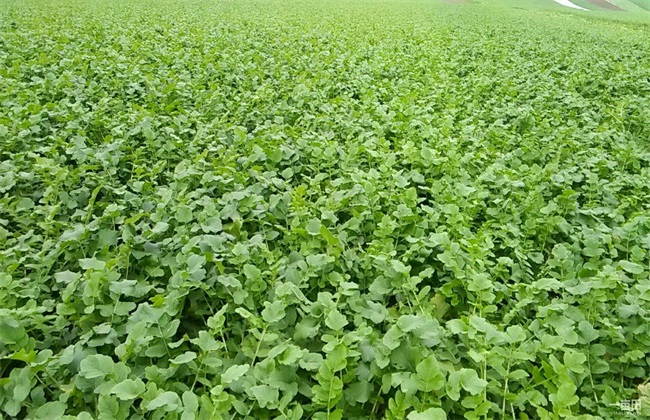
Daikon radish is a root vegetable of the Brassicaceae family and a vegetable often grown in home gardens and on farms. It has many dietary therapeutic benefits. In cultivation, daikon radish has unique requirements for water, temperature, light, nutrients, soil, and more. Only when all these conditions are suitable will it grow well and will the goal of increasing yield and quality be achieved.
1. Water
Daikon radish is mainly composed of water, with about 70% of the root being water, so during the root swelling stage it needs a continuous and abundant water supply. Generally, once it enters the rooting stage, it can be irrigated once a week to keep the soil moist, which is beneficial for root establishment and swelling, all the way until the root matures and is harvested. During this period, if there is drought, increase the irrigation amount at night; irrigating too rapidly during the day can easily cause root cracking.
2. Temperature
Daikon radish is generally sown in summer and autumn, and begins to swell before winter. In winter it can tolerate low temperatures of minus 1 to 2 degrees, so it can be harvested as early as possible after maturity. Do not leave it over winter, as overwintering will cause frost damage, and it will also bolt and become hollow through vernalization. In the early stage, the temperature required for seed germination is between 20 and 25 degrees; during the seedling stage, maintaining a temperature of 18 to 25 degrees also allows good growth. The most suitable temperature for leaf growth is between 13 and 18 degrees; high temperatures are not conducive to leaf growth. During the swelling stage, the temperature can be within the range of 6 degrees to 20 degrees, so attention should be paid to the sowing period.
3. Light
In the early stage, daikon radish also needs more light hours for vegetative growth, which helps promote leaf growth, and then photosynthesis produces nutrients to supply growth and store nutrients for the root system. In the later stage, as the root swells, the light exposure time can be reduced, as the root needs a dark environment to grow. General natural conditions can meet the light requirements.
4. Soil
Since daikon radish is mainly grown for harvesting the fleshy root, the planting soil should preferably be deeper than the soil used for growing other vegetables. When plowing the soil, it should be plowed to a depth of 35 cm, which is beneficial for root growth, prevents forking, and makes growth smoother. Because it absorbs a lot of water, the soil should be loose and not prone to water accumulation, so as to reduce the occurrence of diseases.
5. Nutrients
The soil chosen must be fertile, and base fertilizer must not be omitted. The base fertilizer should be mild, low-concentration farmyard compost, applied in sufficient amount and at the correct depth, and it should be a fertilizer with lasting effectiveness. In the early stage of topdressing, mainly apply nitrogen fertilizer to promote growth, with an appropriate amount of potassium fertilizer to strengthen the stems. In the later stage, mainly apply potassium fertilizer, with an appropriate amount of phosphorus fertilizer, to promote root swelling; do not apply nitrogen fertilizer, so as to balance growth.
The above are the specific growing environment requirements of daikon radish. The more conditions that can be met, the better the growth quality will be. If fewer conditions can be met, the quality may be more stable. In any case, it still has to be decided according to actual production conditions.