How to prevent and control peanut scab? Detailed explanation of control methods
During peanut cultivation, various diseases can be encountered. What I want to talk about now is peanut scab, which mainly damages the aboveground stems and leaves of peanuts. This disease is the main disease that harms leaves and causes plant death, so today let us discuss together why it occurs, how it continues to cause damage, how to eliminate it, and how to prevent it from infecting peanuts.
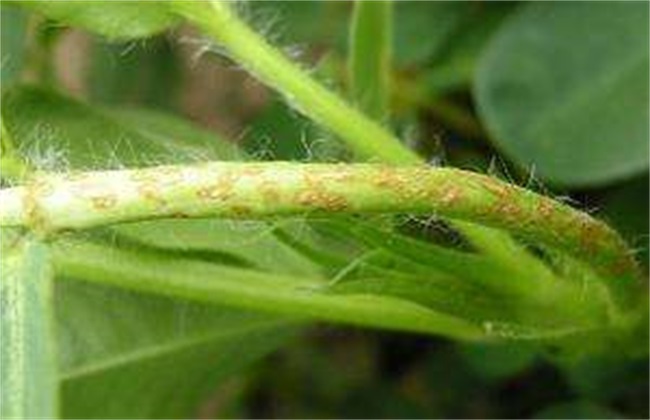
I. Occurrence and spread
Scab is a disease caused by fungal infection. It mainly overwinters on diseased tissue and spreads through wind and rain. Moisture is a prerequisite for infection. Generally, summer is the peak period for the disease to occur. Under high-temperature and high-humidity conditions, it reproduces rapidly through conidia and begins to spread and cause damage over a large area. Because spore reproduction is large in quantity and fast, and the disease incubation period is short, the disease can cause repeated infections.
II. Infection symptoms
This disease mainly infects peanut leaves and stems. After initial infection, yellow-brown spots of irregular shape form on the leaf surface, with the centers of the spots sunken. The spots formed on the underside of the leaves are also irregular with sunken centers, except that the lesion color is light reddish-brown. When the stems and leaf stalks are affected, nearly round lesions are produced, and the lesions gradually expand into large lesions, causing the aboveground parts to die.
III. Control methods
1. Crop rotation
Rotating or intercropping with gramineous crops can reduce the source of inoculum and prevent occurrence. Even if not rotating, try not to continue planting in the same field.
2. Cleanup
After harvest, all aboveground stems and leaves should be gathered and burned to avoid giving the pathogen a chance to overwinter and to prevent continued damage the following year.
3. Fertilizer and water
In rainy seasons, be sure to prevent water accumulation from causing excessive soil and air humidity, which can promote the spread of the disease. Apply less nitrogen fertilizer and more phosphorus and potassium fertilizer, supplement trace elements, and enhance resistance.
4. Spraying
When preparing the land, spray the corresponding pesticide to sterilize and prevent disease, then dry the field for a few days before sowing. Seeds should be disinfected to avoid carrying pathogens. After emergence, first spray Syngenta "Amistar" and DuPont "Kumiai" to prevent the disease. If disease is found, use 50% carbendazim wettable powder at 1500 times dilution for control. If the disease is severe, use 30% difenoconazole · propiconazole at 1500 times dilution for spraying treatment. For preventive spraying, one application may be enough, but for treatment, spray three times consecutively at three-day intervals for good results.
For peanut scab, prevention is key, so prevention must begin before occurrence, at sowing and planting time. If prevention is possible, it is best not to use medication first to reduce residues. However, if the disease occurs, it must be controlled and eliminated quickly. If it cannot be controlled, the medication should be changed and used alternately, with more sprays for prevention and control.