Detailed Explanation of Key Field Management Techniques for Malabar Spinach
Malabar spinach is one of the main vegetables grown in the high summer temperatures of the south. It has a fresh fragrance, is crisp and refreshing, and is like wood ear mushroom, with a unique taste. So do you know how Malabar spinach is managed during cultivation? Below, let's learn about the field management techniques for Malabar spinach together with the editor.
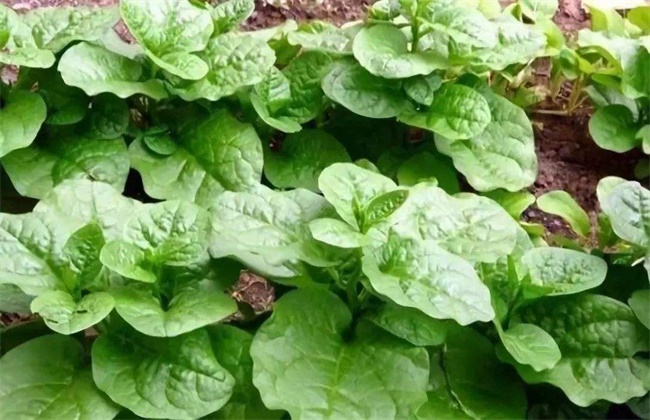
1. Thinning and final thinning
Under suitable temperature and humidity, seedlings emerge soon after sowing. When the seedlings grow 1-2 true leaves, thin them once, and when they grow to 4-5 true leaves, carry out final thinning. The plant spacing for final thinning should follow the sowing method. For drilling, keep the plant spacing at about 20 cm; for broadcasting, keep the plant spacing between 8-10 cm.
2. Temperature management
Malabar spinach has different temperature requirements at each growth stage. After the seedlings emerge, keep the daytime temperature at 25-26 degrees and the nighttime temperature at 16-17 degrees; after the cotyledons unfold, keep it at 28-30 degrees during the day and 18-20 degrees at night; one week before harvesting, lower the temperature, keeping it at 24-25 degrees during the day and 14-15 degrees at night. The purpose of lowering the temperature is to make the plants grow robustly, increase leaf thickness and color, and improve yield and quality.
3. Soil, fertilizer, and water management
Generally, after the seedlings have recovered, when they are placed on the trellis, or after harvesting, carry out intertillage and weeding, and at the same time properly earth up the soil to prevent the roots from being exposed. On the basis of applying sufficient base fertilizer, apply quick-acting nitrogen fertilizer multiple times during the growing period. Generally, after final thinning, apply 15 kg of urea and 5-8 kg of phosphorus-potassium compound fertilizer per mu. After each harvest, also apply fertilizer once in time, applying 15 kg of urea per mu each time. Malabar spinach likes a moist environment, so it should be watered frequently to keep the soil moist, but the amount of water each time should not be too much; it is best to water little but often.
4. Plant adjustment
When harvesting, the tender shoots are the main part. When the seedlings are 30 cm tall, leave 3-4 leaves and harvest the tender shoots, keep 2-3 strong side buds, and remove all the others; at the second harvest, keep another 2-4 strong side buds and remove the rest; during the peak growing season, 5-8 strong side buds may be selected and kept, and in the middle and later stages, remove flower buds in time to reduce nutrient consumption. At the late harvesting stage, when plant growth weakens, select and keep 1-2 strong side buds. This helps the leaves become thick and large, the shoots plump and the stems strong, with good quality and high yield.
The above is an introduction to the field management techniques for Malabar spinach. We hope it can help you. If you want to learn more related knowledge, please keep following us.