How to grow Gynura bicolor? A full breakdown of the key cultivation techniques
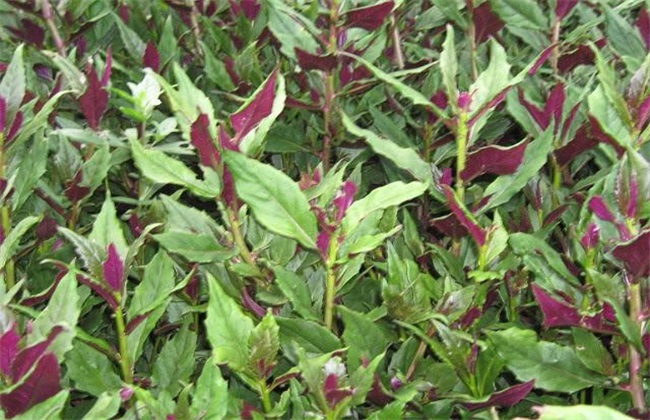
Gynura bicolor is a wild vegetable that people often used to pick and eat in the past. It is also called blood-tonifying herb and has the function of tonifying the blood. Its above-ground parts are mainly eaten. Wild vegetables are a rare delicacy, but now that people have recognized its nutritional value, they have also begun to cultivate it themselves for supply. Cultivation has its own unique process and issues to pay attention to. Now let us introduce its cultivation techniques.
1. Planting time
The usual time is spring and autumn. It can be harvested in all four seasons, with the most vigorous growth in summer, and it can be harvested multiple times. The most commonly used propagation method is cutting propagation, because it has strong sprouting ability, and the cutting method is the most suitable.
2. Selection of mother plants
Generally, choose plants with good growth, normal leaf color, broad leaves, strong root growth, and upright, robust stems as mother plants from which to take cuttings. About two to three branches can be taken from each mother plant, so that the mother plant can continue to grow and remain basically normal. However, if you do not want to keep the mother plant, you can also layer the entire mother plant for propagation, which will produce a somewhat larger number of seedlings. The specific amount depends on the planting area.
3. Land preparation
Choose relatively open, sunny, wind-sheltered, deep, fertile soil for planting, usually sandy loam. Then deep plow the land. During land preparation, broadcast fertilizer over the whole field and mix it into the soil. Form raised rows, with row width of about 30 cm. Plant without raising the bed surface, leaving furrows of about 15 cm for people to walk through, with a depth of about 20 cm. Deep furrows are good for drainage, but if the raised rows are narrow and the furrows too deep, the rows are prone to collapsing after heavy rain. Then sun-dry the field for one week.
4. Preparation for planting
You can first take the side branches from the mother plant, cut off the tender top part, then cut the lower end into a slanted cut. Soak them in a rooting powder solution made with alcohol. Never mix it with water; if mixed with water, the rooting powder cannot exert its effect. Or cut the mother plant off close to the ground, cut off the aged lower part and the tender upper part, shorten the middle stem into small sections of several centimeters, and then soak them in rooting powder. The soaking time is about half an hour in both cases.
5. Planting
Take out the soaked stems. Do not root them in a seedling bed; plant them directly in the field. Calculate the plant and row spacing based on the plants after they have grown. Generally the plant spacing is about 25 cm, and since the raised rows have already been made, the row spacing no longer needs to be considered. First water the rows thoroughly, then dig small holes. Insert two to three plants diagonally into each hole to ensure survival, and press the nearby soil firmly around them. About 20,000 to 30,000 seedlings are needed per mu. After that, cover with a shade net, water daily to keep moist, and after about half a month observe the root growth. Then the shade net can be removed and less water given.
Cultivating Gynura bicolor is roughly such a process. There may be some detailed issues that will come up in actual planting. In production, matters are endless in detail and naturally require much attention. Here we will first introduce only some specific planting methods.