Complete Guide to Hyacinth Bean Planting Time and Methods
The hyacinth bean, also known as the black-eyed pea or sword bean, has high nutritional value and also has medicinal value for strengthening the spleen and removing dampness. It is relatively popular in the market and has attracted more and more farmers to grow it. So when should hyacinth beans be planted? What are the planting methods? Let's take a look.
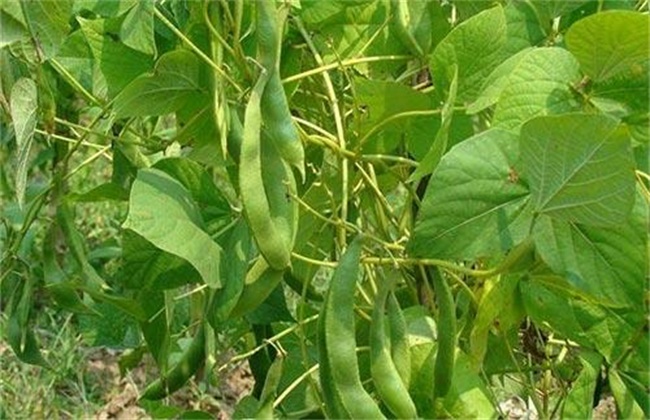
1. Planting Time
Hyacinth beans are generally cultivated in open fields in summer. Usually, sowing can be guaranteed successively after mid-January, but different regions have different climates, so the sowing time also differs. For example, in the Yangtze River Basin, the planting time for hyacinth beans is from May to July, while in North China, the planting time is mostly in June.
2. Seed Selection and Sowing
Hyacinth beans can be divided by pod color into white hyacinth beans, green hyacinth beans, and purple hyacinth beans. Among them, green hyacinth bean pods are flat and thin, crisp and tender; purple hyacinth beans are similar to white hyacinth beans, with thick pod flesh that becomes soft when cooked. When sowing, combined with plowing, apply 3000 kg of decomposed farmyard manure per mu and an appropriate amount of chemical fertilizer as base fertilizer. The fertilizer should be mixed evenly with the soil, then rake and level the land. Hyacinth beans are generally direct-sown, using furrow sowing or hole sowing. Control the plant spacing at 35-50 cm and row spacing at 100-130 cm. Generally sow 3-4 seeds per hole, and after emergence keep two plants per hole.
3. Field Management
Hyacinth beans have strong drought tolerance. They need watering at the seedling stage, and also need watering during the vine extension stage and pod-setting stage. Generally, water 1-2 times during the vine extension stage, and once every 10 days during the flowering and podding stage. After watering, timely carry out intertillage and weeding, and combine with topdressing to prevent flower and pod drop or excessive vegetative growth. Before flowering, apply fertilizer lightly and in small amounts; after flowering during the pod-setting stage, apply fertilizer heavily. Intertillage should be shallow; otherwise it may damage the roots. When fertilizing, pay attention to the rational combination of nitrogen, phosphorus, and potassium, and be careful with the amount of nitrogen fertilizer applied. Set up trellises before vine extension, or use ropes promptly after vine extension to guide the vines onto the trellis. When guiding the vines, make the stems and vines evenly distributed on the trellis. When the main vine grows to 1.5 m, pruning and pinching can be carried out to encourage more side branches and side branch vines, promoting earlier flowering and pod setting.
4. Pest and Disease Control
For hyacinth bean diseases, watering is important. The main pests are aphids and pod borers. Aphids can be controlled with imidacloprid and acetamiprid, and attention should be paid to the concentration when using them. Pod borers feed on bean seeds as larvae, and in severe cases eat the entire pod hollow. Control can be done by spraying 20% fenvalerate 2500-fold solution or 50% fenitrothion 1000-fold solution on the leaves, alternating once a week to avoid resistance.
The above is an introduction to hyacinth bean cultivation techniques. I hope it can help you. To learn more related knowledge, please stay tuned to us.