Detailed explanation of sugar beet planting techniques: master the key points of cultivation and management
Many people do not know much about sugar beet. In most cases, sugar beet is used to make sugar and is rarely used for cooking. It has extremely high economic value and planting value. In China, it is mainly distributed in -, Heilongjiang, Inner Mongolia and other places. So how should sugar beet be planted? Let's learn about it together.
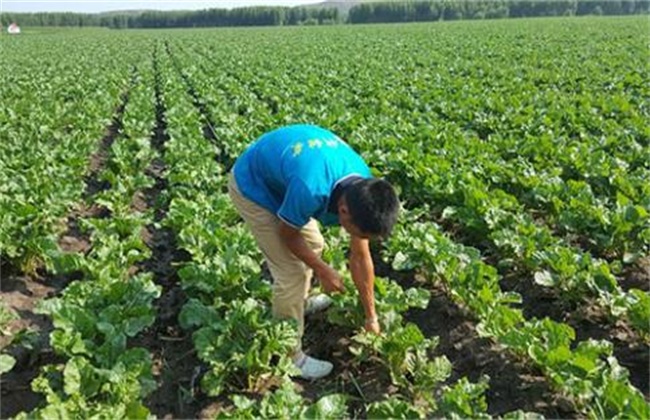
1. Land selection and soil preparation
Choosing a good plot is the foundation for high-yield sugar beet. You should choose a plot with fertile soil, relatively flat terrain and good drainage, and it is best if sugar beet has not been planted there for more than four years. It is not suitable to choose low-lying areas prone to waterlogging or areas with high slopes prone to drought, as this will lead to more serious root rot and lower pests, and do not plant continuously on the same land. After selecting the land, carry out shallow plowing and deep loosening, preferably in late summer and autumn. The plowing depth should be about 25 cm, and the deep loosening should be about 35 cm, breaking the plow pan so that the soil layer is soft and there are no large clods.
2. Timely sowing
Sowing early at the right time can extend the growth period of sugar beet, which is an important measure for obtaining a high yield. According to experiments, within the suitable sowing period, each day of sowing delay reduces the yield by 20-50 kg, so you must sow early at the right time according to local climate conditions to obtain a high yield. Early sowing can not only extend the growth period and increase yield, but also improve the resistance of strong seedlings to diseases and insect pests, and cultivate the ability of strong seedling plots to withstand natural disasters such as wind and freezing. Generally, in the Heilongjiang region, the direct sowing time is mid-to-late April. If raising seedlings and transplanting, it can be done in early April.
3. Reasonable close planting
Reasonable close planting can maximize the advantages of the population and is a key link in obtaining high yield. Reasonable close planting can improve the use of soil nutrients and chemical fertilizers by sugar beet, reduce water evaporation, make use of sufficient sunlight, and increase yield. According to experiments, planting 3000 plants per mu gives a yield of about 3.7 tons per mu, while at a density of 6000 plants, the yield is about 4.3 tons per mu, an increase of 15%. In Northeast China, where the climate is suitable and soil fertility is high, the suitable density is about 5600 plants per mu, with a plant-to-row spacing of 18×66 cm.
4. Reasonable fertilization
To obtain high yield, fertilization is also an important measure. Scientific and reasonable fertilization should be a mixed application of farmyard manure and chemical fertilizer, with a reasonable combination of nitrogen, phosphorus and potassium, and combined application of base fertilizer and seed fertilizer. Generally, apply more than 2000 kg of farmyard manure per mu, together with 50 kg of special fertilizer for sugar beet. If mixing fertilizer yourself, the usual amount is 12 kg of urea, 25 kg of diammonium phosphate, and 13 kg of potassium sulfate. If the soil lacks boron, borax should be added, generally 0.5-1 kg per mu is enough, and it can be applied as a foliar fertilizer for higher utilization efficiency.
The above is an introduction to sugar beet planting techniques. I hope it can help you. If you want to learn more related knowledge, please follow us.