What are the growing conditions for honeysuckle? Understand the growth environment requirements in one article
Honeysuckle is a plant native to China and is fairly widely distributed across the country's provinces. Honeysuckle not only has high ornamental value, but is also a medicinal herb that clears heat and reduces internal heat. It is very popular in summer and can effectively address common problems such as excess internal heat and colds. Its planting area is now fairly extensive, but when growing honeysuckle you must first understand its growing conditions. Let's take a look together with the editor below!
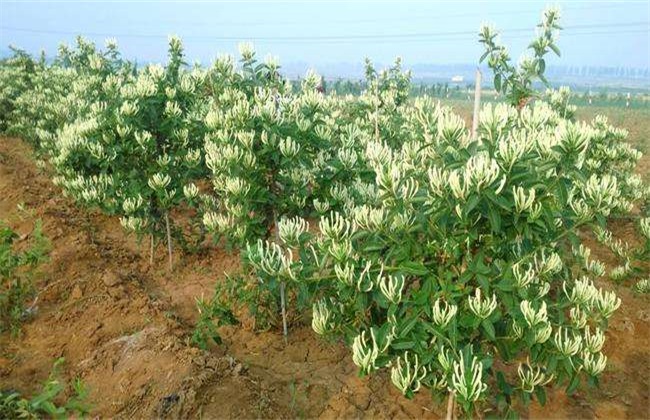
1. Light
Honeysuckle has a very high demand for light during growth, so when planting we should choose a sunny plot with sufficient light. However, in summer, because temperatures are high and light intensity is strong, we should pay attention to good management after summer arrives. This prevents direct sunlight from scorching both the branches and the flowers of honeysuckle. So it can be seen that although the demand for light is high, light intensity must also be controlled well. Therefore, after summer arrives it is best to set up a shade shed to provide honeysuckle with diffused light.
2. Temperature
Temperature is also very important for the growth of honeysuckle, and the suitable temperature for its growth is around 16-25°C. The temperature should not be too high or too low, otherwise it easily causes adverse phenomena such as heat damage and freezing damage in honeysuckle. This is especially true in summer and winter, when temperatures are in a relatively extreme state. In winter, good insulation work should be done to help honeysuckle overwinter normally. Then, when summer temperatures are high, water appropriately in the field to lower the field temperature. In regions where temperatures exceed the range of 5-40°C, honeysuckle is not suitable for planting.
3. Moisture
Honeysuckle is a plant that likes water, but it also has fairly strong drought resistance. When planting, the plot should be chosen where annual precipitation is around 800 mm. During the planting period, air humidity should be maintained at around 70% and must not exceed the 60%-80% range, otherwise it will have a relatively large impact on the growth of honeysuckle. After sowing, an appropriate amount of moisture must be ensured for normal germination. When transplanting, precipitation should be at least 40 mm and air humidity should be maintained at around 72%. However, water should not be excessive either, especially during the flowering period; if there is too much water, it easily produces mute flowers and causes phenomena such as root rot.
4. Soil
Actually, honeysuckle does not have very great requirements for soil, and its adaptability is very strong. It can grow normally in various soils, but different soil quality will still affect its yield to a certain extent. So when planting, if you want to increase yield, then it is best to choose good soil. It is mainly sandy loam that is deep and loose, with sufficient fertility, normal drainage and irrigation, and free of pests and diseases. Good soil is very beneficial to the growth of honeysuckle. Therefore, when planting, soil is also an indispensable condition for honeysuckle.
The above is a brief introduction to the growing conditions of honeysuckle. Honeysuckle actually does not have very strict requirements for the growing environment, but they cannot be ignored either, and these are also things we need to pay special attention to in planting. That is all for today's introduction. This article is for reference only, and I hope it can be helpful to everyone!