Key points of winter melon seedling cultivation techniques and seedling-stage management methods
Winter melon is a very common vegetable; in rural areas, people often plant a few in the small garden in front of or behind the house. What is sold on the market is mostly grown on a large scale by farms. The seed coat of winter melon is relatively thick, and when planting on a large scale, direct sowing tends to produce uneven emergence and makes it difficult for seedlings to emerge. Therefore, it is generally necessary to raise seedlings uniformly before transplanting, so next we will introduce how to carry out seedling cultivation.
I. Seed collection
For the first cultivation, you can buy seeds to plant; purchased seeds are generally already treated, and you only need to soak and sprout them yourself. But afterward you can also save your own seeds. During the maturity period, select some large, healthy-growing winter melons and pick them only after they are fully mature. After picking, cut the winter melon open and take out the plump seed grains. Then put them in clean water to wash off the attached melon fiber, then soak them in water for one hour to wash off the seed mucilage. After removing them, dry them in the sun and store them in a sealed bag.
II. Seed soaking and sprouting
The seeds should first be stirred in 50-degree hot water for 10 minutes to disinfect them. Then soak them in 30-degree warm water for one day. After that, take them out and air-dry them, then put them in an incubator to sprout. The temperature is generally between 25 degrees and 30 degrees. They will sprout in about three days. During sprouting, they must be rinsed once every morning and evening to avoid producing mucilage.
III. Sowing and seedling cultivation
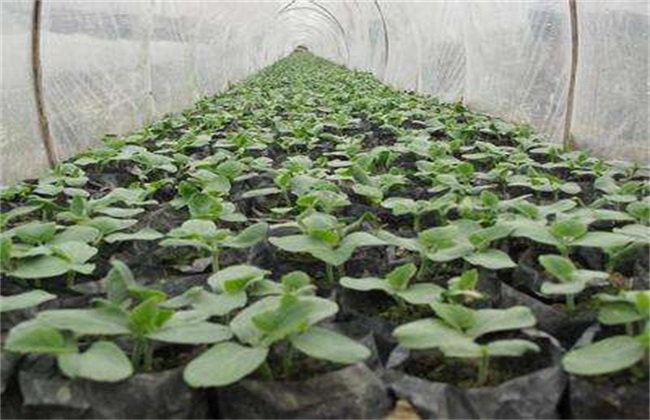
For greenhouse transplanting, seedlings can be raised at any time; for open-field cultivation, seedlings are generally raised in spring. Generally, container seedling cultivation or soil seedling cultivation can be used. Container seedling cultivation requires preparing growing soil, generally using sun-dried fine soil mixed with clean river sand, plus fertilizer, which can be farmyard manure or dissolved chemical fertilizer. After mixing, it needs to be sprayed with pesticide together for disinfection. Only then is it put into trays, with one to two seeds sown per cell, covered with about two centimeters of soil and gently compacted. Finally, spray irrigation or drip irrigation is used; direct flushing irrigation must not be used, as it easily washes away the seeds. Open-field seedling cultivation requires land preparation and fertilization, and also disinfection, but the seeds can be directly broadcast evenly.
IV. Seedling-stage management
During the seedling period, the seedling trays should be moved to a warm place, such as building a greenhouse to place them; in open fields, a small arched shed can be built to keep warm and retain moisture. Before the seeds emerge, they need to be watered once a day to maintain 70% water content, creating a moist and warm environment to promote bud growth, but there should not be too much water, for fear of rotting the seeds.
The process of winter melon seedling cultivation is the content above. By maintaining a certain temperature and humidity, at the right time, using good methods, and paying attention to management, you can complete the winter melon seedling cultivation process with a high emergence rate.