Detailed Explanation of the Key Technical Points for Field Management of Balloon Flower
Balloon flower (Platycodon grandiflorus) is both an ornamental plant and a valuable herb used in traditional Chinese medicine to treat coughs. In Northeast China, it can also be eaten as a pickled vegetable. Its uses are quite wide-ranging. In the past, it grew wild on the mountains and was planted in small amounts by farming households. Today, due to the demand from large pharmaceutical manufacturers, it is being planted artificially on a large scale. After planting, it still needs proper maintenance for growth and development, which is what I will introduce to you next.
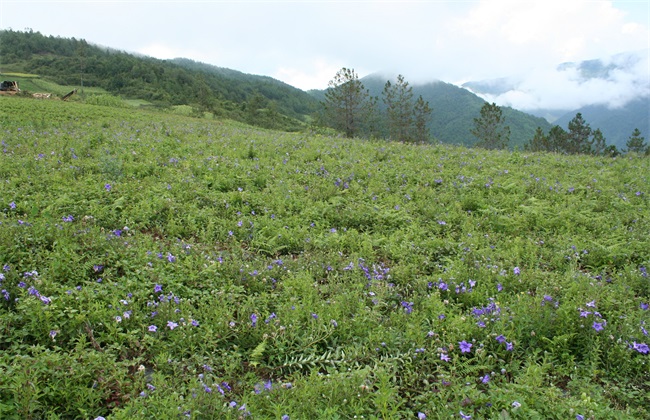
I. Land Selection
Balloon flower is suited to growing in deep, fertile soil, and requires convenient drainage and irrigation. It is especially suited to growing on sunny hillsides. It can even adapt to poor, barren land.
II. Land Preparation and Sowing
The fleshy root of balloon flower is relatively long, so high ridges of about 30 cm should be made when planting. The ridge surface can be about 1 m to 1.5 m wide, and then drainage ditches more than 30 cm deep and wide should be opened. If the soil is heavy and clayey, some plant ash and river sand can be mixed in and applied to the soil together with the base fertilizer, stirred together, and then the beds made. When turning the soil, it must be broken up well; ploughing can be done two more times to keep the soil loose. The soil can be turned somewhat deeper, which helps the roots take hold.
III. Fertilizer and Water
Before sowing, base fertilizer is applied throughout, at a rate of about 400 jin per mu. About 80 jin of homemade grass fertilizer is used. When fertilizing, some chemicals can be mixed in to sterilize and kill insects. During the seedling stage, apply more fertilizer and water, once every two to three days. Early fertilization mainly uses quick-acting nitrogen fertilizer, such as urea; the application amount, timing and frequency depend on the growth of the above-ground branches and leaves. In the later stage, when the fleshy root expands, topdressing and watering are needed most, mainly applying potassium fertilizer and a small amount of phosphorus and calcium fertilizer. Be sure to apply it together with watering, but do not let water accumulate, to prevent root cracking.
IV. Disease Control
1. Moisture
After rain, if water accumulates and the field is too wet, root rot will occur and harm the roots. After being affected, black-brown spots appear, and in the later stage the plant rots and dies. Carbendazim can be mixed with water and poured over the affected area.
2. Disease Prevention
Powdery mildew mainly harms the leaves. When it occurs, the diseased leaves are covered with gray powder, and in severe cases the whole plant withers. At the early stage of the disease, lime sulfur mixture or triadimefon mixed with water can be sprayed.
The above are the main field management measures for balloon flower. Perhaps they are not yet comprehensive enough, but the important content is basically included. As for some small details in the actual planting process, I believe you will experience them once you actually grow it, and you will also accumulate your own valuable experience.