Detailed Explanation of Key Technical Points for Pepper Seedling Cultivation
Peppers are now grown over a very wide area, and when growing peppers, the seedling cultivation work is very important. The seedling cultivation time for peppers is generally around February each year. A low-temperature environment is very favorable for the growth of seedlings, so when raising seedlings we also need to manually control the temperature well to promote seedling growth. So how exactly should pepper seedling cultivation be carried out? Below, the editor brings you the pepper seedling cultivation techniques. Let's take a look!
1. Seedbed selection
The pepper seedling bed should be chosen on soil that is sheltered from the wind, has sufficient sunlight, is thick and loose, and has normal drainage and irrigation. The previous crop in the soil should not be potatoes, peppers, or similar crops. Then control the area well according to the planting quantity; the seedling furrow should not be too wide or too long, otherwise it will affect the growth of the seedlings. Then prepare nutrient soil well to ensure sufficient nutrients and that it is sterile and pest-free. The nutrient soil is mainly mixed from field soil, farmyard manure, and agents such as carbendazim. It can both provide nutrients for seedling growth and do a good job of pest and disease control during the seedling stage.
2. Seed treatment
The main method of pepper seedling cultivation is sowing. Before sowing, first soak the seeds in room-temperature water for about 8 hours. The time should not be too long, otherwise it will cause serious nutrient loss and reduce the germination rate. It should also not be too short, otherwise the seeds will not absorb enough water, which likewise affects germination. After soaking the seeds, drain them, then place them on a wet cloth and wrap them in a plastic bag. Then place the plastic bag at a temperature of about 30 degrees for germination promotion. During germination promotion, the seeds need to be turned appropriately every day so that the seeds are heated evenly. After about 5 days, once about 75% of the seeds have sprouted, sowing can begin.
3. Timely sowing
Before sowing, we should first water the seedbed sufficiently, and only after the water has completely seeped into the soil can we sow. The sowing method for peppers is generally broadcast sowing. When broadcast sowing, spread the seeds evenly and comprehensively over the seedbed to promote uniform emergence. After broadcast sowing, mix soil with agents such as Miaojundi and cover the seeds well. This prevents diseases such as damping-off during the pepper seedling stage. And a layer of nutrient soil about one centimeter thick should also be covered on top, then a layer of plastic film. This improves the seedbed's ability to retain heat and moisture, promotes seed germination, and increases the emergence rate.
4. Seedbed management
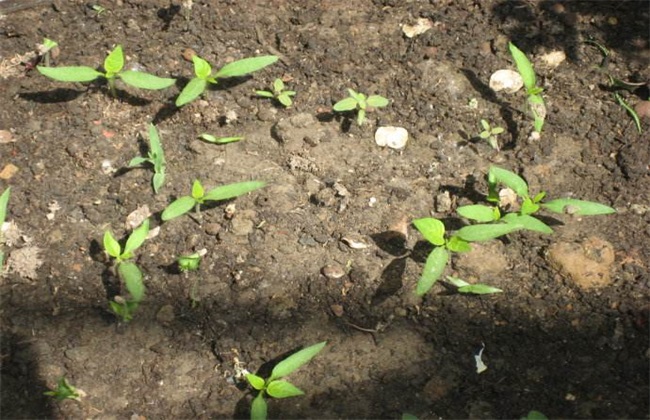
After sowing, control the temperature well, keeping the daytime temperature at about 22 degrees, with the day-night temperature difference controlled at about 10 degrees. When about 65% of the seeds have emerged, remove the plastic film. If the temperature is too high at noon, do a good job of ventilation and cooling to prevent seedling scorching caused by excessive temperature. Then control moisture well; if the soil is dry, water lightly as appropriate, but not too much. Then when the seedlings grow about two true leaves, thin them appropriately, keeping robust seedlings and increasing the growth space for the seedlings. Finally, about half a month before transplanting, carry out hardening off so that the seedlings adapt to the external environment and the survival rate is improved.
The above is a brief introduction to pepper seedling cultivation techniques. When germinating seeds, we should control the three environments of moisture, temperature, and air well to improve the germination rate, then strengthen management and transplant at the appropriate time according to seedling growth. That is all for today's introduction. This article is for reference only, and we hope it can help everyone!