Detailed Explanation of Field Management Techniques for Purslane
Purslane is an edible wild vegetable that can also be used as medicine to treat certain ailments. It is commonly found growing in rural fields and field edges, or along roadsides. It is naturally fond of water, and the places where it grows are always moist. It has strong adaptability and tenacious vitality. In recent years, a certain amount of artificial cultivation has also emerged. During the cultivation process, a certain amount of field management is also needed for it to grow better.
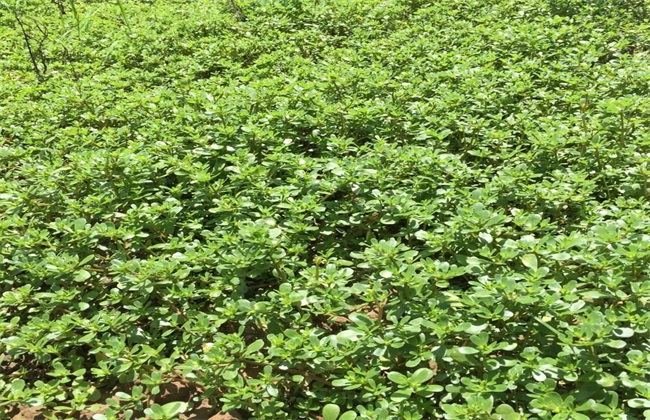
I. Water Control
Purslane needs a large amount of water to grow, and it likes a moist growing environment. Generally, the air and soil humidity should be maintained at around 80%. But at the same time, it is also very drought-tolerant and extremely adaptable, so when conditions are lacking, you can wait until fertilization or particularly dry conditions before watering. During the vigorous growth period, a moderate amount of extra watering can be given. However, each watering should not be done when the weather changes abruptly or when temperatures fluctuate.
II. Fertilization
Base fertilizer is applied before sowing, but there is no need to dress the seeds with chemicals; it is only necessary to spray a herbicide that can kill other weed seeds but is harmless to purslane to kill the weeds in the field. Then dig trenches, apply the base fertilizer in the trench rows, cover with a layer of soil, and then form ridges on the trench rows for planting. Topdressing is generally carried out during the growth period. In the early stage, a small amount of nitrogen fertilizer can be applied to promote growth. During the vigorous growth period, topdressing should be done once every month, applying about 40 jin of quick-acting nitrogen fertilizer per mu each time. After harvesting, fertilizer and water need to be strengthened to encourage the production of new branches.
III. Tender Leaf Control
The young tender leaves of purslane before flowering are the main edible part. If it flowers, the stems and leaves will become old. Therefore, after each harvest, the growing tips must be pinched off, and the terminal flower buds removed. This encourages it to continuously produce new branches, inhibits its reproductive growth, and keeps it continuously sending out new leaves for harvesting. This continues until winter, when growth weakens and it withers.
IV. Cultivation and Weeding
After spraying the chemicals before sowing, if other weeds grow again later, they must be pulled out promptly. Wild weeds compete for nutrients. After they grow and heavy rain compacts the soil, cultivate the soil once to improve aeration and ventilation, promote root growth, and absorb nutrients.
When planting purslane, although it has strong adaptability and strong vitality, artificial cultivation pursues economic returns. Therefore, some specific field management measures are needed to regulate and achieve one's economic goals.