Detailed Explanation of Key Points for Open-Field Eggplant Cultivation Techniques
Eggplant is a common home-grown vegetable planted in spring and summer, in great daily demand, and currently grown in large quantities as well. Generally, as long as it can be supplied, there is no shortage, but it is always in demand. How should eggplant be grown in open fields without protective facilities, and how should it be cultivated on unprotected land? The answer is revealed below.
1. Seed selection and sprouting
Generally, before planting, you must first select suitable good seeds. In the first year you can buy them externally, but afterward you can select and keep seeds yourself. For sprouting, first stir the seeds in 50°C hot water for about 120 minutes to disinfect and sterilize them, then take them out and soak them in 25 to 35°C warm water for two to three hours, then take them out and place them in a gibberellin solution for one day to sprout, or wrap them in a clean white cloth and place them in an insulated box for one day to sprout.
2. Land preparation and sowing
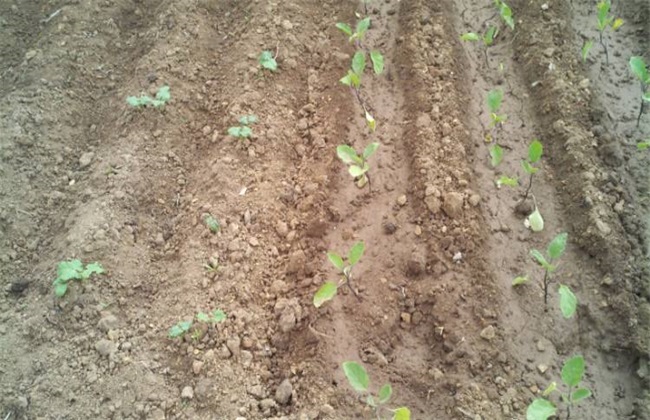
Plant in sandy loam with good soil layers. Before planting, open up ridge surfaces about 1.2 m wide, with no limit on length. The soil must be plowed, broken up, sun-dried, and sprayed with pesticide before planting. Before planting, apply sufficient base fertilizer and water thoroughly to provide nutrients and moisture for seed germination. For sowing, use the method of digging small holes in the ridge rows to sow, not direct broadcasting; place two to three seeds in each hole.
3. Fertilizing and watering
After the seedlings emerge, you can apply dilute manure water twice a day, or some urea. Urea must not be dissolved in water and poured on the roots, as the roots are too weak; generally it can only be carefully scattered beside the seedling roots, without covering with soil, and left to be slowly absorbed so the seedlings quickly grow leaves. When two to three true leaves have grown, you can begin watering on some farmyard manure to let the seedlings grow taller and sturdier as quickly as possible. Two days after fertilizing, irrigate once; watering allows the fertilizer nutrients to flow and be transported within the plant. Then during the fruiting period, apply fruit-promoting fertilizer. Eggplant bears fruit multiple times in one summer, so about 2 to 3 applications of fruit-promoting fertilizer are needed. At this time, watering must be done in real time to maintain a stable water content.
4. Intertillage and weeding
After heavy rain, once the soil has been compacted, carry out intertillage to let the roots breathe and get air. Before fruiting, intertillage can be done once, destroying a small portion of the root hairs to avoid excessive growth of branches and leaves, thereby regulating nutrition and supplying it to the fruit. Pull out weeds whenever they are found.
For growing eggplant, doing the above work is about enough, but there are still many details you can adjust yourself. I believe everyone will gain something from reading this content, and if it can be applied to actual production planting, then the value of this article has been realized.