How to Fertilize Greenhouse Vegetables? Detailed Explanation of Methods and Precautions
Nowadays, vegetable cultivation mostly relies on greenhouses. Greenhouse vegetables can be brought to market earlier and can also be grown out of season, yielding greater profits. However, improper fertilization of greenhouse vegetables not only causes soil compaction and fertilizer damage, but also leads to excessive toxic substances in vegetables, harming human health. Therefore, fertilization of greenhouse vegetables must be done with care. So how should greenhouse vegetables be fertilized? What should be noted? Let's find out together.
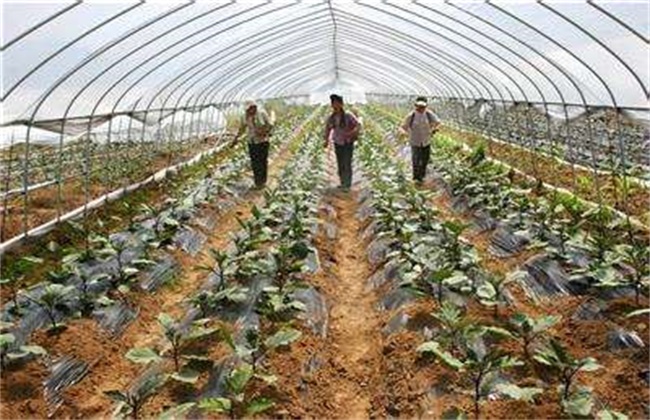
1. Farmyard manure must be fully decomposed
Farmyard manure provides various elements and trace elements and can also increase soil organic matter, so it is widely used in the planting industry. When applying farmyard manure to greenhouse vegetables, it must be fully decomposed. If undecomposed farmyard manure is applied directly, it contains large amounts of pathogens and insect eggs, which will spread with the fertilizer after application, and during the fermentation and decomposition process it also produces large amounts of ammonia gas, burning the seedlings.
2. Fertilization must be scientific and reasonable
Generally, the entire fertilization approach is divided into base fertilizer, topdressing, and foliar fertilizer. Base fertilizer is generally applied one week before planting, mainly consisting of organic fertilizer and farmyard manure, and must be mixed evenly with the soil when applied. Topdressing is generally based on quick-acting fertilizers to promote rapid vegetable growth, applied in furrows or holes 7-10 cm away from the plants, and the soil should be covered and watered promptly after topdressing. It should not come into direct contact with the plants, so as to avoid fertilizer volatilization or scalding the vegetables. Foliar fertilizer is generally applied during the peak nutrient demand period and the late growth stage, choosing a cloudy day or evening, spraying the prepared fertilizer solution onto the leaves so that the vegetables can absorb it.
3. Chemical fertilizers must be applied in appropriate amounts
Fertilizer in greenhouses is lost through watering. If too much chemical fertilizer is applied, it will cause the salt concentration in the soil to become too high, leading to soil salinization. Nitrogen fertilizer application should be controlled, phosphorus and potassium fertilizer should be increased, and nitrate nitrogen fertilizer must also be prohibited. In greenhouse management, ventilation time should be increased, work should be strengthened, nitrate content should be reduced, and some trace fertilizers should be supplemented, which can improve soil structure and enhance vegetable quality.
4. Precautions
Trace fertilizers must be applied in appropriate amounts. The demand of vegetables for trace elements is extremely small, but their effect on vegetables is enormous, greatly improving vegetable quality. Currently commonly used trace fertilizers include boron, molybdenum, zinc, and iron fertilizers. Trace fertilizers are generally used as base fertilizer, and can also be used for seed dressing, seed soaking, or foliar spraying. The dosage must be reasonable to avoid fertilizer damage. Making good use of plant growth regulators can increase yield, but the timing and concentration of use must also be well controlled; otherwise, not only will it fail to increase yield, but it will also affect human health.
The above is an introduction to greenhouse vegetable fertilization methods and precautions. We hope it can help you. To learn more related knowledge, please follow us.