Analysis of the Prospects for Cultivating Horsetail: Is It Worth Developing?
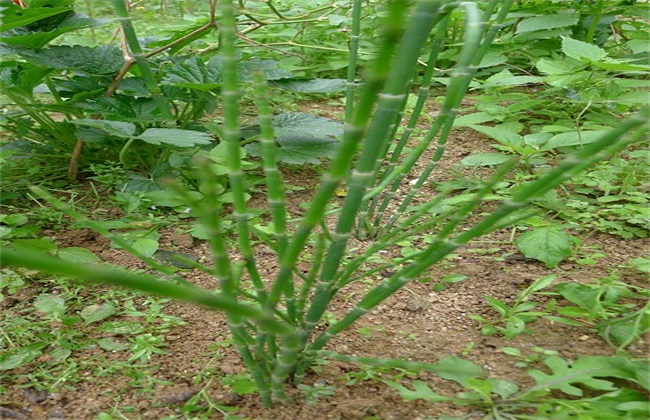
Horsetail is a perennial whole plant of the genus Equisetum in the family Equisetaceae. It grows in places with abundant water and can be seen everywhere in rural areas, where people regard it as a nameless weed. But in fact, as early as the Ming Dynasty, Li Shizhen recorded it in the pharmacopoeia. It has the effects of dispelling wind and dissipating heat, and relieving muscle and reducing fever, and is an important traditional Chinese medicinal herb. In recent years, artificial cultivation has begun to appear, so is artificial cultivation of horsetail feasible, and does it have economic benefits?
I. Market Demand
At present, the amount of artificially cultivated horsetail is not large, and most of it is wild. However, precisely because it is wild, it has extremely tenacious vitality, can adapt to most regions, and is easy to plant. It can also be promoted on a large scale. It has important value in traditional Chinese medicine treatment and clinical treatment. At present, the market price is generally around ten-plus yuan per jin of dried herb, with little price fluctuation.
II. Cultivation Methods and Costs
Generally, excellent, healthy plants with good growth can be selected directly, and then large-scale sowing and cutting propagation can be carried out. Propagated seedlings can be grown directly in the open field, and there is no need to build greenhouses or other facilities. After preparing the seedbed and properly disinfecting it, soak horsetail cut into about 10 cm lengths in rooting powder for half an hour, then insert them into the moist seedbed at a spacing of 3 cm, about 5 cm deep, and that is enough. You can also directly soak the seeds and then sow and raise seedlings, with the same care. Afterward, simply cover with a shade net to protect from the sun and water every day until the root system has fully grown, and then they can be transplanted. You only need to apply some base fertilizer before planting, and no additional fertilizing is needed at other times. The whole plant is toxic, so insects generally will not harm it. You can appropriately watch for whether any diseases occur.
It can thus be seen that throughout the entire process of cultivating horsetail, the cost is much lower than that of other medicinal plants. Basically, only a certain labor management cost and a small amount of fertilizer and pesticide expenses are needed. There are also no facility construction costs, and even the seedlings can be collected by oneself or kept for breeding.
III. Current Cultivation Status
At present, there are many species of wild horsetail, distributed throughout the country. The main cultivation production areas are in the Inner Mongolia region. For example, the output is highest in the Hinggan League, Jirem League, Chifeng City, Ikh Juu League, and Alxa League areas. It even grows in the Tibet region. At present, the most common cultivation is still in the southern region of our country. Because wild resources are gradually decreasing due to harvesting, and there is a large population needing the medicine, people have begun artificial cultivation and promotion of planting.