Causes of and Control Methods for Rolled Corn Whorl Leaves
Corn is an important cash crop in China and the main source of income for many farmers, but many people are asking about the phenomenon of rolled corn whorl leaves. Rolled whorl leaves refers to the young whorl leaves twisting and deforming, unable to unfurl in time, which seriously affects growth in the later stages. So what causes rolled corn whorl leaves? How should they be prevented and controlled? Let's find out together.
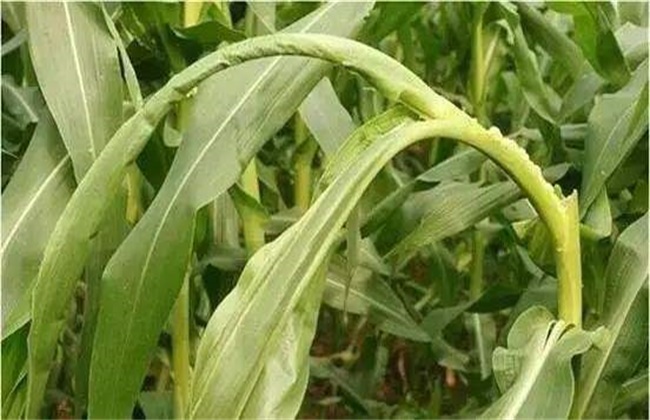
1. High temperature and drought
In a high-temperature environment with dry soil, the roots cannot absorb enough fertilizer and water, and the whorl leaves will curl up. This varies with how well different corn varieties adapt to the climate, so the proportion of rolled whorl leaves can differ greatly. Rolled whorl leaves caused by normal field drought generally recover gradually as soil moisture improves, recovering relatively quickly after rain or irrigation; spraying some foliar fertilizer can also promote recovery.
2. Herbicide damage
When herbicide is used for weed control during the corn growing period, if the corn seedlings are younger than 3-5 leaves, or if the herbicide is sprayed in a high-temperature environment, or if the herbicide concentration is too high or the application rate is too large, rolled whorl leaves and shrunken leaves will appear 3-7 days after application, along with irregular yellow spots, and in severe cases the whorl leaves rot. Most plants will return to normal growth as the symptoms ease; for severe whorl leaf cases, the whorl leaves can be slit open by hand. For severely affected patches of soil, water promptly and spray foliar fertilizer to promote plant recovery.
3. Insect pests
There are two insect pests that cause rolled corn whorl leaves. One is thrips, which generally damages corn at the 3-5 leaf stage, causing the corn whorl leaves to become whip-like and the leaves to fail to emerge in time, and also causing chlorotic spots on the leaves; thrips can be seen moving when the whorl leaves are peeled open. Spraying nitenpyram or spinetoram can be used for control. The other is damage by the frit fly, also known as the black wheat stem fly; its larvae bore into the gaps between the whorl leaves to cause damage, injuring the whorl leaves, and their secretions tightly glue the whorl leaves together so they cannot unfurl, while the lower leaves continue to grow. Spraying insecticides can control it, and combining this with spraying trace elements promotes the plants' return to normal growth.
4. Top rot
This disease can cause damage at any growth stage of corn. When it occurs, the outermost leaves of the whorl tightly wrap the inner leaves so they cannot unfurl normally, and the leaves become deformed, shrunken or twisted; rot, dry rot or wet rot is commonly seen in the whorl. For this disease, spraying fungicides such as carbendazim or chlorothalonil at the early stage of onset gives good control results.
The above is an introduction to what to do when corn whorl leaves roll up. We hope it helps you. For more related knowledge, please stay tuned to us.