How to raise early spring tomato seedlings? Key techniques explained
Tomato is a common edible vegetable in people's daily lives, widely cultivated around the world and deeply loved by people everywhere. Early spring cultivation is meant to fill the gap in market demand and is a new technique in modern vegetable growing. Quality and yield are the goals people pursue, and good seedlings are the guarantee for subsequent growth. Now let us look at exactly how this seedling raising should be carried out.
1. Seedbed preparation
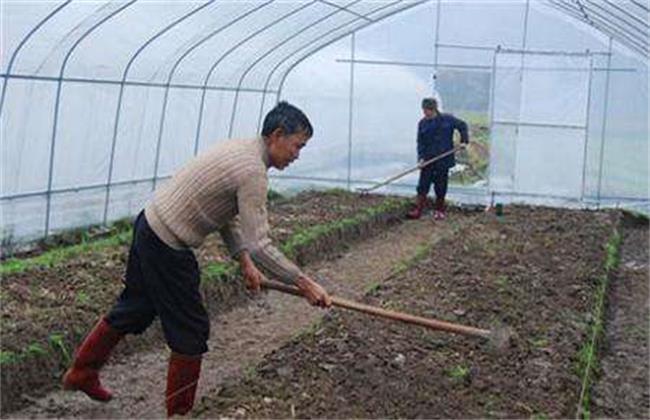
Dig the ground, open furrows and form ridges, with furrows about 10 cm deep and wide. Break up the soil on the seedbed into fine crumbs; when necessary, sift the soil once with a coarse sieve. The fine soil layer should ideally be 20 cm deep. Put nutrient soil on the upper layer, and set up a small film-covered tunnel for raising seedlings.
2. Disinfection and sterilization
Before sowing, sun the seedbed for 3 to 4 days, then use 50% carbendazim wettable powder diluted with water and spray it on the seedbed to kill pathogens. In addition, the seeds also need to be dressed with carbendazim to prevent the seeds from carrying pathogens. You can also use warm water soaking to disinfect and promote germination; use 50-degree hot water and stir for about 20 minutes to achieve the sterilization effect.
3. Sowing
Are the ridges spaced about 20 cm apart? Directly on the bed surface, use your hand to make small pits about 4 cm apart and about 2 cm deep, put in 2 to 3 seeds, or simply broadcast them all over. Then cover with about 1 cm of fine soil, and finally water the whole seedbed a little so the seeds make close contact with the soil.
4. Fertilizing
For base fertilizer, more than half can be decomposed organic fertilizer. If the nutrient soil is fertile, less fertilizer can be applied during the seedling stage. If the leaf color becomes pale, showing a fertilizer deficiency, some foliar nitrogen fertilizer can be sprayed. During this period, apply a certain amount of compound fertilizer according to the growth of the seedlings. Supplement trace element fertilizer regularly and in fixed amounts.
5. Temperature
Before emergence, the temperature must not be too low; low temperatures cause the seeds not to germinate, or to grow thin and weak. After the seedlings emerge uniformly, avoid high temperatures, which can easily scorch the seedlings. Once two true leaves have grown, the seedbed must be kept warm to avoid flower and fruit drop in early spring, which affects early yield. At noon on sunny days, the soil temperature can easily become too high, so the film at both ends can be uncovered for proper ventilation, but at night the film must be well covered, so that the day-night temperature difference does not freeze the seedlings to death.
6. Humidity
Generally, no watering is needed during the seedling stage to prevent damping-off disease. Do not water at noon on sunny days; generally water after the sun sets in the afternoon. Water according to the weather and the size of the seedlings. If too much watering occurs, you can scatter plant ash to absorb moisture or ventilate.
7. Light
Seedlings need an appropriate amount of light to grow well. In winter the temperature is lower, and although there is a risk of freeze damage, the film still needs to be uncovered to receive light, so that they do not grow deformed. Try to uncover the film once every morning to increase the light exposure time, and do this on cloudy days as well.
8. Pests and diseases
During the seedling stage, damping-off and Rhizoctonia rot often occur. When the disease strikes, rot appears from the seedling roots and they may even break off, directly killing the whole plant. Therefore, the main measure is to spray carbendazim before the seedlings emerge for prevention.
Early spring tomato breeding should pay attention to the above operating points, so as to ensure strong and healthy seedlings. To ensure early-stage yield and quality, solve specific problems in light of actual conditions. I hope the above content can help everyone with the specific operations.