Detailed Explanation of the Cultivation Techniques and Planting Management Methods of Chinaberry Tree
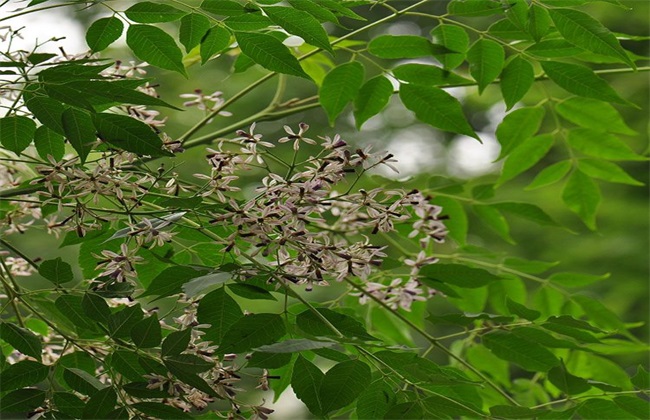
Chinaberry tree (Melia azedarach) is a kind of traditional Chinese medicinal herb with high utilization value, mainly reflected in five aspects: its flowers, fruits, leaves, root bark and its timber. In China, chinaberry tree is mainly distributed in the areas south of the Yellow River, and has already been widely cultivated artificially. So do you know how to plant chinaberry tree? Do you understand its planting techniques? Then today, let us learn about the cultivation techniques of chinaberry tree together.
1. Site Selection and Land Preparation
Chinaberry tree has the characteristics of preferring warmth, preferring moisture, tolerating alkali and tolerating poor soil. Generally, sandy soil with deep soil layers, loose texture, fertile soil, good drainage, rich humus content and good permeability is suitable. However, slightly acidic red soil, yellow soil, sandy soil, black soil and so on can also be used to plant chinaberry tree. However, it should be noted that heavy clay land and shady land with poor drainage are also not suitable for planting chinaberry tree. When preparing the land, the crushed stones, dead branches, tree roots, weeds and so on in the field should be cleaned up; at the same time, plowing and leveling should be carried out in combination with base fertilizer. The amount of base fertilizer should be controlled at three thousand to four thousand kg per mu, mainly organic fertilizer. Finally, break the soil clods into fine pieces and level the ground, then wait for planting.
2. Propagation Methods
There are mainly two propagation methods for chinaberry tree, namely seed propagation and cutting propagation. For seed propagation, the seeds must be treated before sowing, otherwise the germination speed is slow and the germination rate is very low. The treatment method is generally to soak the seeds of chinaberry tree in water at a temperature of about seventy to eighty degrees, and after the seeds have fully absorbed water, take them out for germination acceleration. After about ten percent of the seeds show white sprouts, they can be sown; but before sowing, the seeds need to be soaked in potassium permanganate solution for a few minutes, which can improve the resistance of the seeds. Cutting propagation is generally carried out from the end of February to early March each year. Select robust chinaberry branches, cut them into small sections of fifteen cm, and then insert them at a row spacing of thirty-five cm.
3. Transplanting and Field Planting
Only when the chinaberry seedlings have grown to about thirty-five to fifty cm do we carry out seedling transplanting and field planting. The planting density is generally about fifty-five to one hundred and ten plants per mu. At the beginning, the row spacing for cultivation is three m to four m, and the plant spacing is two m to three m. When the plants grow again, we also need to transplant and plant them again, with a row spacing of five m to six m and a plant spacing of four m to five m. When planting, it is necessary to ensure that the root system of the chinaberry seedlings is fully spread out, so the length, width and height of the planting holes are generally about fifty to seventy cm.
4. Cultivation Management
After the chinaberry trees are planted, check their survival situation and replant seedlings in time to ensure that the chinaberry trees in the field are complete. In the first three years after cultivation, the number of fertilizations is generally three times per year, and watering is generally about five times. Topdressing is mainly based on quick-acting nitrogen fertilizer and quick-acting phosphorus and potassium fertilizer, with the amount per plant controlled at about one jin, applied by trenching. Watering is carried out according to the growth condition of the chinaberry seedlings, and at the same time, in rainy periods, pay attention to drainage to avoid water accumulation in the field. Finally, it is also necessary to carry out intertillage, weeding and earthing up in time to ensure soil permeability, while avoiding damage to the root system of chinaberry tree.
5. Pest and Disease Control
The most common diseases of chinaberry tree during growth are canker disease, brown spot disease, witches' broom disease, mosaic disease and leaf spot disease. We can use targeted agents for control, such as chlorothalonil, Bordeaux mixture and so on. The main pests are yellow slug moth, flattened slug moth, spotted lanternfly and star longhorn beetle, which can be controlled with dimethoate, fenitrothion and so on.
Chinaberry tree planting generally follows this process. Of course, when planting, we also need to pay attention to pruning the tree shape, which is also very beneficial to the later yield of chinaberry tree.