Detailed Explanation of Key Rice Field Management Techniques
Rice is the main food crop in most parts of the country, with absolute market demand. In recent years, a large number of high-quality varieties have been bred, and rice yields have been continuously increasing. The field management techniques after planting determine whether the yield can be increased. If later-stage management is not up to standard, the expected yield may not be reached, and certain losses may also be caused. Today, let's learn about the later-stage field management techniques for rice together!
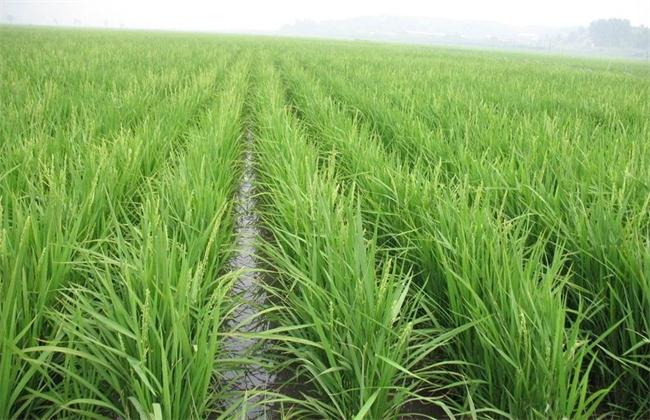
1. Fertilization timing
First, apply the annual base fertilizer before transplanting, of which the amount of nitrogen fertilizer used is about one quarter of the fertilizer used in the previous year, and the amount of potassium fertilizer used is about two quarters of the annual total. When the leaves grow to about four true leaves, in order to promote the emergence of rice ears, increase grain weight, and ensure yield and quality, ear fertilizer should be used. When applying it, if the conditions are high temperature and rainy, observe whether diseases occur in the field. If there is no rice blast and other diseases, it can be applied early; if there is, it needs to be applied later after prevention and control. Ear fertilizer is generally compound fertilizer accounting for about one quarter of the annual total. Regulating fertilizer can be used during the growth period when fertilizer deficiency causes poor growth. The timing and amount are not fixed; observe the plants and supplement specifically according to what is lacking.
2. Water control
Rice needs a large amount of water throughout its entire growth period. After planting, irrigate once uniformly at the seedling stage, and maintain a shallow water amount for a certain period, replenishing in real time during this period; at this time there is basically no change. In summer, during the main growth period and the jointing stage, more water is needed, generally reaching about 10 to 20 cm. If a late spring cold spell occurs, the next irrigation should wait until the temperature rises, and the water layer needs to be deepened. Before heading, dry the field for three to four days, with the purpose of protecting the root system and preventing lodging. After heading, maintain a shallow water layer; after full heading, maintain a water amount of three to five cm, and stop irrigation after grain filling.
3. Disease control
After a certain number of true leaves have grown at the seedling stage, spray the leaves with Jiasuomi liquid agent to control bacterial brown spot; in high-temperature and rainy seasons, spray the whole plant with rice blast amide suspension agent to control the occurrence of rice blast. Before the flag leaf stage, observe whether there are diseases such as sheath blight and sclerotinia; if present, use relevant pesticides for control; at the heading stage, focus on controlling rice neck blast, brown discolored ears and other diseases. Rice often suffers from rice stem borers and leaf rollers; use methomyl spray at the stem base for control.
The field management measures for rice are mainly the above content. Of course, specific situations should be analyzed and handled specifically. Understanding these simple related points of knowledge will also provide some help for actual operations, so it is believed that rice yield and quality can certainly be improved.