Detailed Explanation of Key Techniques for Planting Luffa in Early Spring
Luffa is one of the common vegetables in our daily life, and early spring luffa has excellent planting prospects, but its cultivation also has certain particularities. So how should early spring luffa be planted? Let's learn about it together.
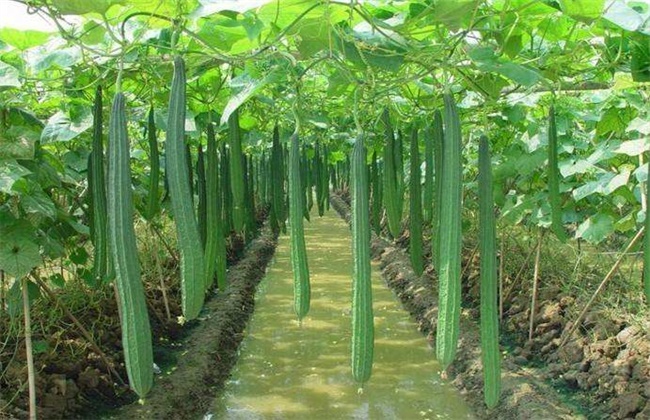
1. Planting Preparation
For early spring luffa, mainly choose early-maturing, disease-resistant, high-quality varieties. The suitable growth temperature for luffa is 25-35°C, so it is generally sown and raised in greenhouses in March, transplanted in April, and marketed in July. First, put the luffa seeds into warm water at 50-55°C, stir continuously for 10-15, until the water temperature cools to 40°C, then soak for one day, changing the water once every 10 hours. After soaking, rub and wash the seeds, remove them, wrap them in gauze, and place them in a 25-28°C environment for germination. During germination, rinse once a day with warm water until the seeds sprout white, then sow.
2. Sowing and Seedling Raising
When sowing, mix field soil and farmyard manure at a 1:1 ratio and fill it into the seedling bed. When filling the soil, the lower part should be compacted and the upper part loose. Water thoroughly once when sowing. Evenly sow the already germinated luffa seeds into the seedling bed, cover with about 1.5 cm of soil, then cover with plastic film. If there is a cold snap, cover with a shed to keep warm. Use about 250-300 per mu of seeds. After sowing, maintain the temperature at 25-30°C to facilitate emergence. Generally, seedlings emerge in 4-5 days. After emergence, keep the temperature between 15-25°C, and at the same time do a good job of watering to promote growth. Pay attention to the amount of watering to avoid water accumulation and root rot.
3. Transplanting
Cover with a shed 20 days before transplanting, which is conducive to soil thawing. After thawing, apply sufficient decomposed organic fertilizer as base fertilizer. When the seedlings have 4 true leaves unfolded, choose robust seedlings and transplant them on a sunny morning. When transplanting, control the plant spacing at 35-40 cm. After transplanting, water enough basal water. Generally, plant about 200 plants per mu. After transplanting, maintain 30-35°C during the day and 20-25°C at night. When the daytime temperature exceeds 35°C, ventilate appropriately. When it is below 15°C, reduce ventilation.
4. Fertilizer and Water Management
Luffa likes a humid environment, so keep the soil moist throughout the growth period. After the early slow seedling stage, water once with slow seedling water. During flowering and fruiting, water once a week. During the harvest period, water once every 3-4 days. Watering should preferably be done on a sunny morning, and watering should be even. Do not flood irrigate. If luffa lacks water, it will lead to increased fiber, uneven fruit shape, and reduced quality. When sufficient base fertilizer is applied, topdressing should also be done multiple times. The first topdressing is after the slow seedling stage, applying 50-10 kg of compound fertilizer per mu. During the flowering and fruiting period, topdress once every 7-10 days. During the harvest period, topdress once every 2-3 days. Topdressing can use compound fertilizer or human manure and urine. If luffa lacks fertilizer during the flowering and fruiting period, deformed fruits will form, seriously affecting quality.
The above is an introduction to early spring luffa planting techniques. We hope it can help you. To learn more related knowledge, please follow us.