Key Points and Methods of Pteris multifida Cultivation Techniques
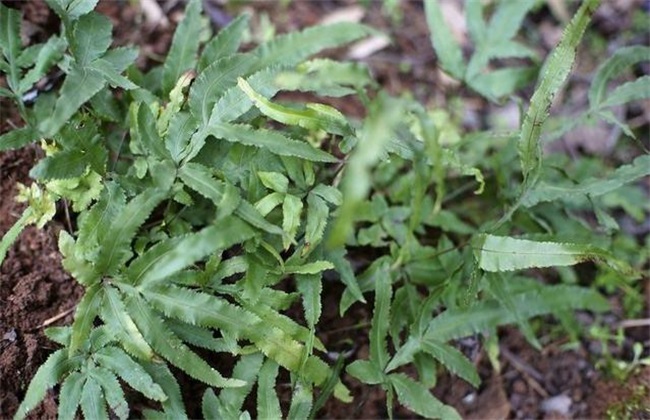
Pteris multifida, also known as chicken-foot grass, golden chicken tail, and other names, is a fern with certain medicinal value, often used to treat dysentery, enteritis, bloody stool, and other conditions. Wild Pteris multifida generally grows in cool and moist places in the mountains, and currently wild resources are still quite abundant. However, in some places people also cultivate Pteris multifida artificially. So do you know how to grow Pteris multifida? Below we will learn about the artificial cultivation techniques of Pteris multifida together.
1. Field Preparation
Pteris multifida has the characteristics of preferring moisture, semi-shade, warmth, and strong adaptability, and generally grows better in places without direct sunlight. Pteris multifida does not have strict requirements for the soil of the planting site; generally, places where other crops can be grown or where ferns are suitable for growth can all be used to cultivate Pteris multifida. However, it should be noted that there must be shade around the planting site, otherwise it will increase the difficulty of later management work. The land should be deeply plowed, and then sufficient base fertilizer should be applied to the soil, mainly farmyard manure, with the amount per mu controlled at around one thousand to two thousand kg, to ensure sufficient soil fertility. Finally, level the land, dig water ditches well, and wait for planting.
2. Planting Methods
There are two methods of propagating Pteris multifida, namely spore propagation and division propagation; but when we carry out artificial planting, the most commonly used is still division propagation. Generally in spring, dig out the mother roots of Pteris multifida, then divide mother roots of different sizes into two to five small plants, and then plant them in separate holes. When planting, the distance between each plant is about ten cm. After covering with soil and setting, the ground should be compacted, and then watered once.
3. Field Management
After Pteris multifida is planted, if there is no shade in the field and it is relatively open, we need to build a shade shed and control the light intensity at about thirty percent. During the growth process of Pteris multifida, multiple intertillage and weedings should be carried out, and the humidity of the planting site should be maintained. In dry seasons, water should be given in time, and in rainy seasons, drainage should also be carried out appropriately, because humidity that is too low or too high is unfavorable to the growth of Pteris multifida. Finally, attention should be paid to topdressing. The nutrient demand of Pteris multifida during growth is actually not very high, so it only needs about three applications of liquid fertilizer each year.
4. Harvesting and Processing
There is a big difference between Pteris multifida and the harvesting of other medicinal materials and other crops. Pteris multifida can generally be harvested all year round. When harvesting, we should retain a part, because if part of the root is retained after harvesting, then after topdressing again it will grow back, which can increase the yield of Pteris multifida. Secondly, after Pteris multifida is harvested, it should be washed clean. It can be used directly fresh, or it can be used after drying in the sun, except that drying in the sun can extend its storage time.
Cultivating Pteris multifida is very simple, and now wild resources are available in many places, and obtaining seeds is also much easier than for other precious medicinal materials. In addition, the cost of planting Pteris multifida is very low, so this is also the reason why some people grow it.