Key Points of Guijianyu Cultivation Techniques and Cultivation Management Methods
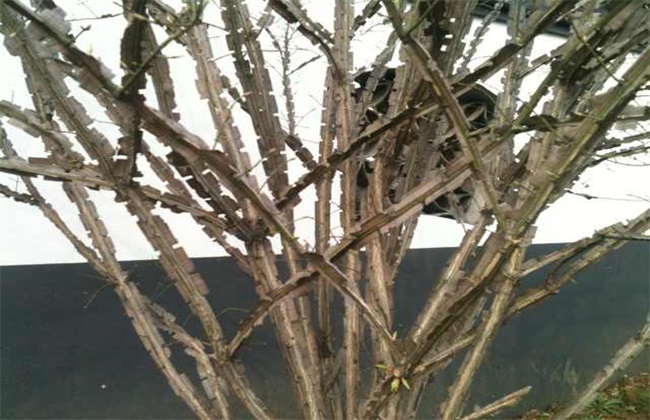
Guijianyu, also called weimao, jianzhongxiao, mayao, etc., is a plant of the Celastraceae family. Its main medicinal part is the branches and stems, and it has effects such as detoxification and swelling reduction, and insect killing. So do you know how to cultivate Guijianyu? What points should we pay attention to when planting? Let us briefly learn about it together below.
1. Soil and fertilizer preparation
Guijianyu is heliophilous, so the planting site is generally chosen in a place with relatively sufficient light. Although Guijianyu has low requirements for the growing environment, since planting is naturally aimed at high yield, the soil fertility of the planting site should be sufficient, the soil should be pollution-free, the nearby water source should be good, and drainage and irrigation should be convenient. Land preparation should be carried out together with base fertilizer, generally mainly organic fertilizer, while an appropriate amount of compound fertilizer is also needed at the same time. After applying the fertilizer, plow and level the ground again, then dig planting holes at a spacing of 1 m between rows and 1 m between plants. The length, width and height of the planting holes are 60 cm, 50 cm and 50 cm respectively.
2. Planting methods
Before transplanting and establishing Guijianyu, seedlings need to be raised. There are two ways of raising seedlings, namely seed propagation and cutting propagation. Seed propagation is generally carried out in spring, and sowing is generally done by drilling, with a row spacing of 20 cm. Sow the seeds evenly, then cover with soil to hide the seeds, and finally water once and cover with rice straw or plastic film. Cutting propagation is carried out in June and July every year, with cuttings inserted at a spacing of 6 cm. After the seedlings survive, transplant the Guijianyu seedlings into the prepared planting holes for cultivation. When planting, its root system must be fully spread out, and when covering with soil, the seedlings should be kept upright.
3. Cultivation key points
In the early stage after planting and establishment, we mainly pay attention to shading, and the shading objects should be removed only after Guijianyu has completely survived. Secondly, keep the field moist, but when watering, be sure to water only after the soil has dried; generally do not water when there is still moisture. In addition, the growth of Guijianyu requires a large amount of nutrients, so we generally need to apply topdressing once about every two weeks, mainly with decomposed cake fertilizer. When topdressing, attention should also be paid to the use of potassium fertilizer and phosphate fertilizer, and nitrogen fertilizer should be used as little as possible to avoid excessive vegetative growth. When the branches and leaves sprout and grow in spring, pruning of branches and leaves should be carried out appropriately to maintain reasonable permeability of the tree crown.
4. Pest and disease control
During the growth of Guijianyu, the main pests include the yellow-box looper and the yellow-box moth, etc. They are leaf-eating pests and mainly damage the leaves of Guijianyu. For these pests, we can use trichlorfon or some other low-toxicity insecticides for control.
That is all the editor wants to share with you about Guijianyu cultivation techniques. I believe that through reading the above, you are all clear about the basic process of cultivating Guijianyu. Thank you for your reading and support.